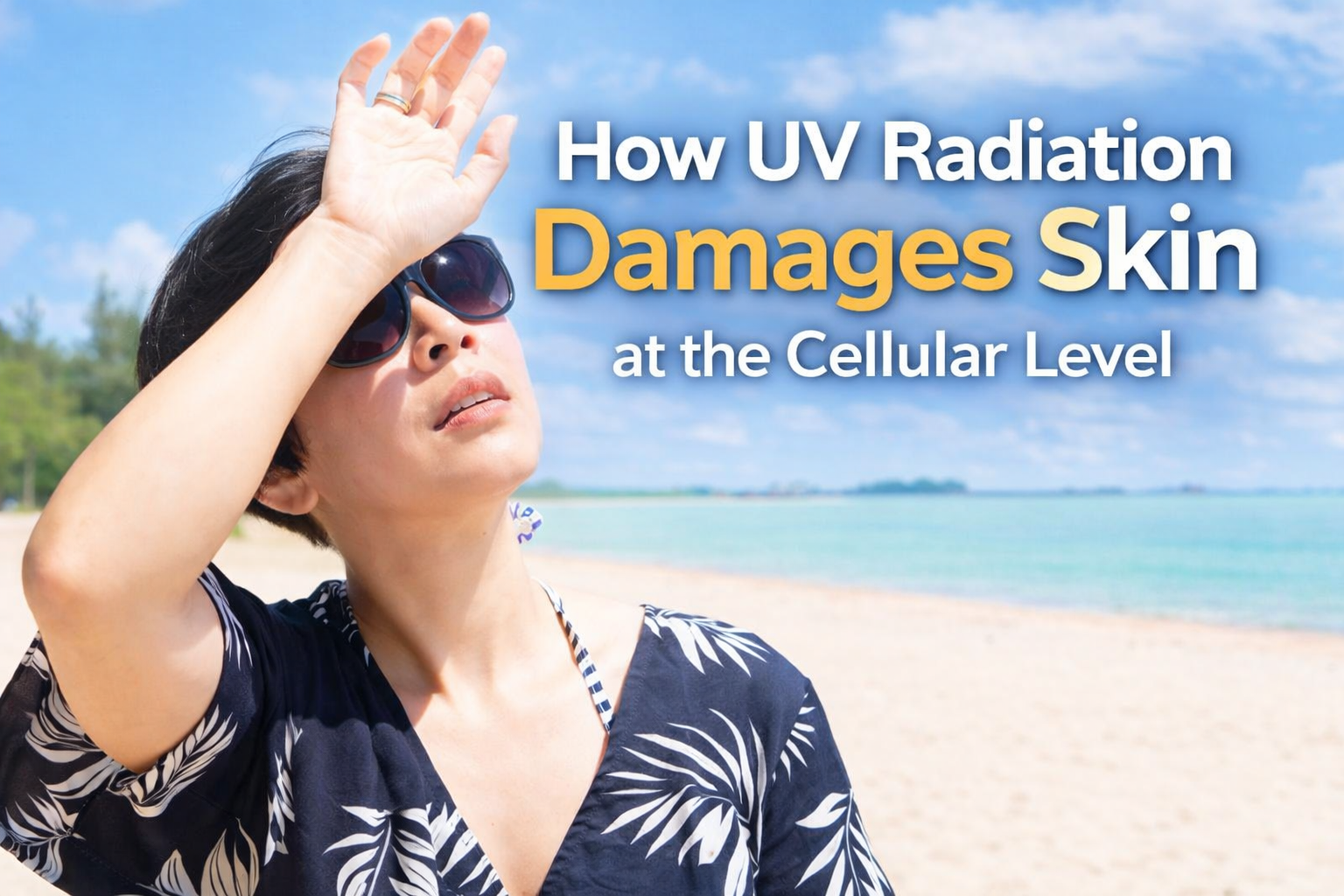
How UV Radiation Damages Skin at the Cellular Level
Ultraviolet (UV) radiation from the sun is one of the most significant environmental factors affecting skin health. While moderate sunlight exposure is essential for vitamin D synthesis and overall well-being, excessive UV exposure can cause profound damage deep within the skin — right down to the cellular and DNA level.Understanding how UV radiation damages skin at the cellular level is critical for preventing premature aging, pigmentation issues, and even skin cancer. In this comprehensive guide, we’ll break down the science in simple terms — from the types of UV rays to the molecular damage they cause and how you can protect your skin effectively.What Is UV Radiation?Ultraviolet radiation is a form of electromagnetic energy emitted primarily by the sun. It is invisible to the human eye but powerful enough to penetrate the skin and trigger chemical reactions inside cells.UV radiation is broadly divided into three types:UVA (320–400 nm)UVB (280–320 nm)UVC (100–280 nm)Fortunately, the Earth’s ozone layer blocks most UVC rays. However, UVA and UVB reach the surface and impact human skin daily.Types of UV Rays and Their Skin PenetrationUnderstanding the depth of penetration is key to grasping how cellular damage occurs.UVA Rays: The Silent Skin AgersUVA rays penetrate deeply into the dermis — the thick middle layer of skin. They are present all year round and can even pass through clouds and glass.Key characteristics:Penetrate deeply into the dermisGenerate reactive oxygen species (ROS)Cause photoaging (wrinkles, sagging)Contribute to DNA mutations indirectlyPresent during all daylight hoursBecause UVA damage accumulates slowly and silently, it is often called the “aging ray.”UVB Rays: The Burning RaysUVB rays primarily affect the epidermis — the outermost skin layer. They are more intense during midday and are the primary cause of sunburn.Key characteristics:Affect the skin surfaceDirectly damage DNACause sunburn and inflammationMajor contributor to skin cancerVary by season and time of dayEven short bursts of UVB exposure can cause immediate cellular injury.Skin Structure: Why Cellular Damage MattersTo understand UV damage, you must first understand the basic architecture of the skin.The skin has three primary layers:Epidermis – outer protective layerDermis – contains collagen, elastin, blood vesselsHypodermis – fat layer for insulationWithin these layers live specialized cells:Keratinocytes – main epidermal cellsMelanocytes – pigment-producing cellsFibroblasts – collagen-producing cellsLangerhans cells – immune defense cellsUV radiation disrupts the normal functioning of each of these cell types in different ways.Step-by-Step: How UV Radiation Damages Skin CellsLet’s dive into the cellular and molecular mechanisms.1. DNA Damage: The Primary ThreatThe most critical harm caused by UV radiation is DNA damage.Direct DNA Damage (Mostly UVB)UVB photons are energetic enough to be absorbed directly by DNA molecules inside skin cells. This causes abnormal bonding between adjacent DNA bases — primarily thymine.This leads to formation of:Cyclobutane pyrimidine dimers (CPDs)6-4 photoproductsThese distort the DNA helix.Why this is dangerous:DNA replication errors occurMutations accumulateCancer risk increasesIf the body fails to repair these mutations correctly, the damaged cells may become precancerous or cancerous.2. Oxidative Stress and Free Radical FormationUVA radiation works differently. Instead of directly damaging DNA, it generates reactive oxygen species (ROS).These include:Superoxide radicalsHydrogen peroxideHydroxyl radicalsThese unstable molecules attack cellular components.Targets of oxidative stress:DNACell membranesProteinsMitochondriaThis process is called photo-oxidative damage and is a major driver of skin aging.3. Breakdown of Collagen and ElastinInside the dermis, fibroblast cells produce collagen and elastin — the proteins responsible for firm, youthful skin.UV exposure triggers:Activation of matrix metalloproteinases (MMPs)Suppression of new collagen synthesisFragmentation of existing collagen fibersResult:WrinklesSaggingLoss of skin elasticityRough skin textureThis process is known as photoaging, and UVA rays are the primary culprit.4. Mitochondrial DamageMitochondria are the energy powerhouses of cells. UV-induced oxidative stress damages mitochondrial DNA (mtDNA), which is more vulnerable than nuclear DNA.Consequences include:Reduced cellular energy productionIncreased ROS generationAccelerated cellular agingImpaired skin repairOver time, mitochondrial dysfunction contributes significantly to visible skin aging.5. Inflammation CascadeUV exposure triggers an inflammatory response in the skin.When keratinocytes detect DNA damage, they release signaling molecules such as:InterleukinsTumor necrosis factor (TNF)ProstaglandinsThis leads to:RednessSwellingHeatPain (sunburn)Chronic inflammation also promotes long-term tissue damage and aging.6. Immune System Suppression in the SkinOne of the lesser-known but critical effects of UV radiation is local immune suppression.UV exposure impairs Langerhans cells, which are responsible for detecting pathogens and abnormal cells.Effects include:Reduced immune surveillanceIncreased infection riskHigher skin cancer susceptibilitySlower wound healingThis immune suppression is why frequent sun exposure increases skin cancer risk even without obvious sunburn.7. Pigmentation Changes and Melanin ResponseWhen skin senses UV damage, melanocytes produce more melanin as a protective response.Melanin acts like a natural sunscreen by absorbing UV radiation.However, excessive UV exposure causes:Uneven melanin distributionHyperpigmentationSunspotsMelasmaPost-inflammatory pigmentationOver time, melanocyte function can become dysregulated, leading to persistent pigmentation disorders.8. Cellular Senescence: Premature Skin AgingRepeated UV exposure pushes skin cells into senescence, a state where cells stop dividing but remain metabolically active.Senescent cells:Release inflammatory factorsDamage surrounding cellsImpair tissue repairAccelerate agingThis is a major reason why sun-exposed skin looks older than protected skin.Acute vs Chronic UV DamageUnderstanding the difference helps clarify risk.Acute (Short-Term) EffectsSunburnRednessTanningTemporary inflammationDNA damage initiationChronic (Long-Term) EffectsWrinklesLoss of elasticityPigmentation disordersActinic keratosisSkin cancersThickened, leathery skinMost visible aging signs are the result of cumulative UV exposure over years.How the Body Attempts to Repair UV DamageThe skin is not defenseless. It has sophisticated repair mechanisms.DNA Repair PathwaysCells use nucleotide excision repair (NER) to remove UV-induced DNA lesions.Steps include:Damage recognitionExcision of faulty DNA segmentDNA resynthesisLigationHowever, repair is not always perfect.With repeated exposure:Repair systems become overwhelmedMutations accumulateCancer risk risesAntioxidant Defense SystemThe skin naturally contains antioxidants such as:Vitamin CVitamin EGlutathioneSuperoxide dismutaseThese neutralize free radicals.But excessive UV exposure depletes antioxidant reserves, leaving cells vulnerable.Who Is Most Vulnerable to UV Damage?Certain factors increase susceptibility:Fair skinHistory of sunburnsOutdoor occupationsHigh-altitude livingUse of photosensitizing medicationsWeakened immune systemAging skinHowever, no skin type is completely immune to UV damage.The Link Between UV Radiation and Skin CancerWhen DNA mutations accumulate in key genes (like p53), normal cell growth control breaks down.This can lead to:Basal cell carcinomaSquamous cell carcinomaMelanomaUVB is strongly associated with direct mutations, while UVA contributes through oxidative stress and immune suppression.Skin cancer typically develops after years of cumulative UV exposure.Modern Sources of UV ExposureMany people underestimate their daily UV exposure.Common sources include:Direct sunlightCloudy-day exposure (up to 80% UV penetrates clouds)Reflected UV from water, sand, snowTanning bedsWindow exposure (UVA passes through glass)High-altitude sunlightDaily incidental exposure often contributes more to aging than occasional beach trips.Evidence-Based Ways to Protect Skin CellsPrevention is far easier than reversing damage.1. Use Broad-Spectrum ProtectionChoose products that protect against both UVA and UVB.Look for:SPF 30 or higherPA+++ or higherBroad-spectrum labelReapply every 2 hours when outdoors.2. Strengthen Internal Antioxidant DefenseDiet and supplements that support antioxidant status may help reduce oxidative stress.Helpful nutrients include:Vitamin CVitamin ECarotenoidsPolyphenolsAstaxanthinThese support the skin’s natural defense systems.3. Limit Peak Sun ExposureUVB is strongest between 10 AM and 4 PM.Practical steps:Seek shadePlan outdoor activities early morning or eveningMonitor UV index4. Wear Physical BarriersProtective clothing remains one of the most effective defenses.Best options:Wide-brim hatsUV-protective clothing (UPF rated)Sunglasses with UV protectionFull-coverage clothing during peak sun5. Support Skin Repair at NightNighttime is when the skin performs most repair work.Helpful practices:Adequate sleepTopical antioxidantsRetinoids (if appropriate)Barrier-repair moisturizersProper hydrationThe Future of UV ProtectionResearch is rapidly advancing in:DNA repair enzymes in skincareOral photoprotective supplementsAdvanced antioxidant systemsAI-based UV exposure trackingSmart wearable UV sensorsThe goal is shifting from simple sun blocking to cellular-level photoprotection.Final ThoughtsUV radiation damages the skin far beyond what we see in the mirror. At the cellular level, it triggers DNA mutations, oxidative stress, collagen breakdown, immune suppression, and premature aging.The most important takeaway is this:UV damage is cumulative, mostly invisible at first, and largely preventable.By understanding how UV radiation affects skin cells — and by adopting consistent daily protection habits — you can dramatically reduce the risk of premature aging, pigmentation problems, and skin cancer.Protect early, protect daily, and think beyond just sunburn — because true skin health begins at the cellular level.
Read MoreWed, 11 Mar 2026 13:48:00 GMT
Oral Sunscreen: Can a Pill Really Protect Your Skin from the Sun?
For decades, the gold standard of sun protection has been a thick layer of lotion, a wide-brimmed hat, and the wisdom of avoiding the midday rays. But what if you could boost your defenses against ultraviolet (UV) radiation simply by swallowing a capsule with your morning coffee? That is the promise behind oral sunscreen, a category of dietary supplements that is rapidly gaining traction in dermatology offices, wellness clinics, and skincare aisles around the world.While the idea of a pill that shields your skin from the sun may sound futuristic, the science behind oral photoprotection is grounded in decades of research on plant extracts, vitamins, and antioxidants. In this guide, we will break down what oral sunscreen actually is, how it works, who can benefit from it, and—most importantly—why it should never replace your trusted bottle of SPF.What Is Oral Sunscreen?Oral sunscreen is a broad term used to describe ingestible supplements designed to support the skin's natural defense system against UV radiation. Unlike topical sunscreens that physically block or absorb UV rays at the skin's surface, a sunscreen supplement works from the inside out by neutralizing free radicals, calming inflammation, and supporting cellular repair processes that occur after sun exposure.You may also hear oral sunscreen referred to as sunscreen pills, sun protection pills, internal sunscreen, or a UV protection supplement. While the names vary, the underlying concept is the same: deliver protective compounds through the bloodstream so they can support every skin cell, including hard-to-cover spots like the scalp, ears, and eyelids.It is important to set expectations early. Oral sun protection is not a substitute for topical SPF. Instead, dermatologists view these supplements as a complementary layer of defense—an extra shield that can enhance the protection you already get from creams, sprays, clothing, and shade.How Does Oral Photoprotection Work?When UV light strikes your skin, it triggers a cascade of harmful reactions. It generates reactive oxygen species (free radicals), damages DNA, breaks down collagen, and activates inflammation that can lead to redness, premature aging, and even skin cancer. A topical sunscreen primarily addresses the first step by absorbing or reflecting UV rays before they reach the skin. Oral photoprotection, by contrast, focuses on what happens after some of those rays inevitably get through.The active compounds in sunscreen pills typically work through several mechanisms. They neutralize free radicals before they can damage DNA and lipids, support the skin's repair enzymes that fix UV-induced mutations, reduce the inflammation that drives sunburn and pigmentation, and reinforce the skin barrier to keep it resilient. Together, these effects mean your skin recovers faster and sustains less long-term damage from a given amount of sun exposure.Key Ingredients in Sunscreen SupplementsNot all oral sunscreens are created equal. The most credible products contain ingredients that have been studied in clinical trials. Here are the heavy hitters worth knowing about.Polypodium Leucotomos Extract (PLE)Polypodium leucotomos is a tropical fern native to Central and South America, and its leaf extract has become the most well-known ingredient in the oral sun protection world. Brands such as Sunsafe Rx are formulated with PLE, and clinical studies suggest the extract can raise the threshold for UV-induced redness, reduce DNA damage in skin cells, and lower oxidative stress after sun exposure.PLE works by acting as a powerful antioxidant, scavenging the free radicals produced by UVA and UVB rays. It also appears to protect Langerhans cells—the immune sentinels of the skin—which can otherwise be suppressed by UV light. People who take PLE before a beach day or a long day outdoors often report less redness and faster recovery, though it remains a supportive measure rather than a sunscreen replacement.Niacinamide (Vitamin B3)Niacinamide, also known as nicotinamide, is one of the most thoroughly researched vitamins in dermatology. Taken orally at a typical dose of 500 milligrams twice daily, niacinamide has been shown in randomized trials to reduce the rate of new non-melanoma skin cancers—including basal cell and squamous cell carcinomas—in patients with a history of these lesions.Niacinamide supports the skin in several ways. It enhances DNA repair after UV damage, replenishes cellular energy stores depleted by sun exposure, strengthens the skin barrier, and helps preserve immune surveillance against precancerous cells. While it is not technically a sunblock, its protective track record makes it a popular addition to any internal sunscreen routine, especially for high-risk patients.Vitamins C and EVitamins C and E are classic antioxidants that work synergistically to quench free radicals generated by UV light. Vitamin C plays a key role in collagen synthesis, helping the skin recover from photoaging, while vitamin E protects cell membranes from oxidative damage. When taken together as part of a daily UV protection supplement regimen, they may help reduce the visible signs of photoaging, calm inflammation, and bolster the skin's overall resilience.Carotenoids: Beta-Carotene, Lycopene, and AstaxanthinCarotenoids are the pigments that give carrots, tomatoes, and salmon their vivid colors—and they happen to be powerful photoprotective compounds. Beta-carotene, a precursor to vitamin A, has been used for years to help patients with rare photosensitivity disorders. Lycopene, the red pigment in tomatoes, has been shown in small studies to reduce UV-induced redness when consumed regularly. Astaxanthin, a deep-red carotenoid produced by certain microalgae, is one of the most potent antioxidants in nature and is increasingly featured in modern oral sunscreen formulas.Polyphenols and Green Tea ExtractGreen tea polyphenols, particularly epigallocatechin gallate (EGCG), have demonstrated photoprotective effects in laboratory studies. They reduce inflammation, support DNA repair, and may help prevent immune suppression caused by UV exposure. Other polyphenol-rich extracts—from grape seed, cocoa, and pomegranate—are also showing promise as components of internal sun protection strategies.Who Should Consider Sunscreen Pills?Oral sun protection is not for everyone, but it can be especially valuable for certain groups. People with melasma, vitiligo, or other pigmentary disorders that flare with sun exposure often see meaningful improvements when they pair topical SPF with a daily sunscreen supplement. Individuals with a personal or family history of skin cancer, particularly basal cell or squamous cell carcinomas, may benefit from niacinamide and PLE as part of a long-term prevention plan.Patients with photosensitivity—whether caused by lupus, polymorphous light eruption, solar urticaria, or medications that increase UV sensitivity—frequently turn to oral photoprotection for added relief. Outdoor enthusiasts, athletes, lifeguards, farmers, and frequent travelers to sunny destinations can also use sunscreen pills as an extra safety net during high-exposure periods. Finally, people who have undergone laser treatments, chemical peels, or other procedures that leave the skin temporarily more sensitive often find that internal sunscreen helps them recover more comfortably.How to Use Oral Sun Protection EffectivelyTo get the most out of any UV protection supplement, consistency matters. Most products are designed to be taken daily, and the protective compounds need time to build up in the body and skin. For PLE-based products, many dermatologists recommend taking one capsule about 30 minutes before significant sun exposure, with an additional dose mid-day if you will be outside for several hours. Niacinamide and antioxidant blends are typically taken once or twice daily as part of a routine, regardless of whether you plan to be outdoors.A few practical tips can help you maximize results. Pair your oral sun protection with a broad-spectrum sunscreen of SPF 30 or higher, and reapply every two hours when outside. Wear UPF-rated clothing, wide-brimmed hats, and UV-blocking sunglasses for full coverage. Try to limit direct exposure between 10 a.m. and 4 p.m., when UV intensity peaks. And remember that no pill can compensate for completely skipping topical SPF.Are Sunscreen Supplements Safe?For most healthy adults, the ingredients in oral sunscreen are considered safe at recommended doses. PLE has been used clinically for decades with an excellent safety profile. Niacinamide is well tolerated at therapeutic doses, although very high amounts can cause flushing or, rarely, liver irritation. Vitamin E in mega-doses can interact with blood thinners, and high beta-carotene intake has been linked to increased lung cancer risk in heavy smokers, so personalization matters.Pregnant or breastfeeding women, people taking prescription medications, and anyone with a chronic medical condition should always speak with a physician or dermatologist before starting any sun protection pills. Supplements are not regulated as strictly as medications, so it is wise to choose products from reputable brands that follow good manufacturing practices and provide third-party testing.The Bottom Line: Supplements Enhance, They Do Not ReplaceThe most important message about oral sunscreen is also the simplest. No supplement, no matter how scientifically formulated, can match the immediate UV-blocking power of a properly applied topical sunscreen. Think of internal sunscreen as the supporting cast in a larger sun-safety production. Topical SPF, protective clothing, shade, and smart timing remain the lead actors. Sunscreen supplements add depth to the performance by helping your skin recover, repair, and resist damage that gets through despite your best efforts.For people with specific dermatologic concerns—pigment disorders, a history of skin cancer, photosensitivity, or simply a passion for outdoor living—oral photoprotection can be a meaningful upgrade to an existing routine. For everyone else, it can offer reassurance that your skin has an extra layer of antioxidant and reparative support.Talk to Your Dermatologist FirstBefore adding any new sunscreen supplement to your routine, schedule a conversation with a board-certified dermatologist. They can review your medical history, evaluate your skin cancer risk, identify any photosensitive conditions, and recommend the combination of topical and oral options most likely to benefit you. They can also help you choose reputable brands, set realistic expectations, and integrate the supplement into a comprehensive sun-safety plan.Oral sunscreen represents one of the most exciting frontiers in modern skincare. It blends nutrition science, dermatology, and preventive medicine into a single capsule designed to keep your skin healthier for the long haul. Used wisely, alongside a great topical SPF and sensible sun habits, sunscreen pills can be a smart addition to your year-round defense against the sun—an inside-out approach to protecting the skin you live in every single day.
Read MoreWed, 06 May 2026 23:50:00 GMT
Does Oral Sunscreen Really Work? The Science Behind Internal Sun Protection
Oral sunscreen supplements have moved from a niche category to a recognized part of modern dermatology recommendations — but does the science actually back the claims? The answer, based on decades of peer-reviewed clinical research, is yes. Multiple placebo-controlled human trials published in dermatology and nutrition journals — including the Journal of the American Academy of Dermatology, the British Journal of Dermatology, Nutrients, and the American Journal of Clinical Nutrition — have demonstrated that key ingredients like Polypodium leucotomos extract, astaxanthin, lycopene, lutein, zeaxanthin, EGCG, and grape seed extract measurably reduce UV-induced skin damage, oxidative stress, and inflammation when taken consistently. This article reviews what the published research shows, explains how researchers actually measure photoprotection, separates evidence from marketing claims, and explains why comprehensive multi-ingredient formulas deliver the most complete protection.A pill that protects your skin from the sun. On the surface, it sounds like the kind of wellness marketing claim that should be dismissed instantly. Sunscreen comes in a tube. You apply it to your skin. Anything else is hype. Right?Not according to the body of clinical research that has been quietly accumulating in peer-reviewed dermatology journals for the last three decades. The question is no longer whether the antioxidants in oral sunscreen supplements measurably affect how skin responds to UV exposure. That question has been answered repeatedly in placebo-controlled human trials. The real question is more practical: how big is the effect, how should it be used, and how do you separate the genuinely evidence-based products from the hype?This article walks through what published clinical research actually shows about oral photoprotection — ingredient by ingredient, study by study. We will look at how researchers measure whether an oral supplement protects skin, what the data says about the most studied ingredients, what oral sunscreen cannot do, and why a comprehensive multi-ingredient formula tends to outperform single-ingredient products. For a side-by-side comparison of how oral and topical sun protection complement each other, see oral sunscreen vs topical sunscreen.The Skeptic’s Question: Does a Pill Really Protect Skin from UV?The skepticism is understandable. The skin is an external organ. Sunscreen lotion is an external defense. The idea that swallowing a capsule could affect how the dermis responds to ultraviolet light feels counterintuitive.But the human body does not work that way. Almost everything you eat and absorb circulates through the bloodstream and reaches every tissue in your body — including skin and eyes. Antioxidants, in particular, are known to accumulate in skin tissue when consumed consistently. The carotenoids that make carrots orange and tomatoes red can be measured in human skin samples weeks after dietary intake increases. This is not theoretical. It is biochemistry.The real question is whether this accumulation is meaningful. Does it translate into measurable protection against UV damage? Researchers have been asking exactly this question for over thirty years, and the answer — across dozens of independent studies, in different countries, using different ingredients — has been consistent: yes, when the right ingredients are used at clinically relevant doses, oral antioxidants measurably reduce UV-induced skin damage.How Researchers Actually Measure Whether Oral Sunscreen WorksTo evaluate the research, it helps to understand what clinical trials in this field actually measure. The most rigorous studies use several specific markers.Minimal Erythema Dose (MED)The Minimal Erythema Dose is the smallest amount of UV exposure required to cause visible redness in skin. It is one of the most standardized objective measurements in dermatology. Researchers expose participants to controlled UV doses before and after a supplementation period — and measure whether the MED increases (meaning the skin can tolerate more UV before damage becomes visible). Multiple oral photoprotection studies have shown statistically significant MED increases following supplementation with Polypodium leucotomos, lycopene, and lutein/zeaxanthin.Erythema Intensity ScoringBeyond the threshold, researchers also measure the intensity of redness at fixed UV doses. A reduction in UV-induced erythema after supplementation is direct evidence that the inflammatory response to sun exposure has been moderated.Skin Biopsy MarkersIn more invasive but scientifically rigorous studies, researchers take small skin biopsies before and after UV exposure to measure:DNA damage markers (such as thymine dimer formation)Oxidative stress markers (lipid peroxidation products)Inflammatory cytokine levels (TNF-α, IL-6, IL-8)Matrix metalloproteinase activity (linked to collagen breakdown)When supplementation reduces these biomarkers, it provides molecular-level evidence of photoprotection — not just visual changes.Skin Carotenoid LevelsFor carotenoid-rich supplements, researchers can measure how much of an ingredient actually accumulates in skin tissue over time. This validates whether oral intake translates to bioavailable skin concentration — a critical step that many “skincare-from-within” products fail to demonstrate.Long-Term Photoaging MarkersSome studies follow participants for months or years, measuring changes in wrinkle depth, pigmentation, skin elasticity, and texture as longer-term outcomes.The Clinical Evidence — Ingredient by IngredientHere is what the published clinical literature shows for the most well-studied oral photoprotection ingredients.Polypodium leucotomos extract — The most studied ingredientPolypodium leucotomos is a tropical fern extract that has been studied in oral photoprotection research for over thirty years. The body of evidence is substantial and consistent.A placebo-controlled study published in the Journal of the American Academy of Dermatology demonstrated that PL supplementation significantly reduced UV-induced erythema, decreased DNA damage in skin cells, and increased the skin’s Minimal Erythema Dose.Additional research published in Photodermatology, Photoimmunology & Photomedicine has demonstrated efficacy in managing photosensitive conditions including polymorphous light eruption (PMLE).For a deeper dive into PL specifically, read Polypodium leucotomos benefits for skin and sun protection.Astaxanthin — Skin moisture, elasticity, and oxidative defenseA 2017 randomized, placebo-controlled trial published in Nutrients showed that 12 weeks of oral astaxanthin supplementation significantly improved skin moisture, elasticity, smoothness, and reduced markers of UV-induced oxidative stress.Earlier research published in Acta Biochimica Polonica also documented astaxanthin’s photoprotective effects on UV-exposed skin.Astaxanthin is a carotenoid derived from marine microalgae and is considered one of the most potent antioxidants in nature — measurably more effective than vitamin C or vitamin E in some standardized antioxidant assays.Lycopene — A 40% reduction in UV-induced erythemaLycopene is the carotenoid responsible for the red color of tomatoes. Research published in the British Journal of Dermatology demonstrated that dietary lycopene supplementation reduced UV-induced erythema by approximately 40% in human subjects after 10–12 weeks of consistent intake.Additional research has shown that lycopene accumulates in skin tissue and acts as a potent free-radical scavenger.Green Tea Polyphenols (EGCG) — DNA protection and anti-inflammatory activityEGCG (epigallocatechin gallate) is the primary photoprotective polyphenol in green tea. Multiple clinical and laboratory studies have shown that EGCG reduces UV-induced DNA damage, suppresses inflammatory cytokines, and supports skin cell recovery after UV exposure.Research published in Cancer Prevention Research further documented EGCG’s role in supporting skin health under UV stress.Grape Seed Extract (OPC) — Potent free-radical scavengingGrape seed extract is rich in oligomeric proanthocyanidins (OPCs), which are among the most potent natural free-radical scavengers known. Published research has shown that OPCs support skin resilience, protect collagen from UV-induced breakdown, and contribute to anti-inflammatory activity in skin tissue.Lutein and Zeaxanthin — Dual skin and eye protectionA double-blind, placebo-controlled study published in Skin Pharmacology and Physiology demonstrated that 12 weeks of oral lutein and zeaxanthin supplementation measurably improved skin hydration, elasticity, and superficial skin lipids — while reducing lipid peroxidation, a marker of oxidative skin damage.Lutein and zeaxanthin are also the primary components of macular pigment in the eye, providing dual-tissue protection that no topical sunscreen can match.Vitamin C and Vitamin E — A synergistic duoVitamin C is the skin’s primary water-soluble antioxidant; vitamin E is its lipid-soluble counterpart in cell membranes. Multiple clinical studies have shown that combined oral supplementation with both vitamins produces significantly greater UV protection than either alone — yielding up to a 4-fold increase in antioxidant capacity.Published research has also documented the systemic photoprotective effects of vitamin E alone.Omega-3 Fatty Acids — Reducing UV-induced inflammationA randomized controlled trial published in the American Journal of Clinical Nutrition showed that oral omega-3 supplementation reduced UV-induced immunosuppression in human skin.Beyond inflammation, omega-3 fatty acids are essential for healthy cell membrane structure — including in skin and retinal tissue.For a comprehensive overview of these ingredients and how to choose the most effective formulas, read our guide on the best supplements for sun protection and healthy skin.What Oral Sunscreen Cannot Do — Realistic ExpectationsHonest discussion of oral sunscreen requires acknowledging what it cannot do.It cannot replace topical SPF. No oral supplement provides protection equivalent to a broad-spectrum SPF lotion. Topical sunscreen physically blocks UV at the surface; oral antioxidants reduce damage from UV that gets through and support cellular recovery. Both layers are needed.It cannot prevent sunburn from extreme UV exposure. If you sit unprotected in midday sun, you will still burn — perhaps slightly less, perhaps less inflamed, but burn nonetheless. Oral sunscreen raises the threshold; it does not eliminate the danger.It cannot work overnight. The antioxidants in these formulas accumulate gradually in skin and eye tissue. Studies show meaningful changes typically begin after 4 weeks of consistent daily use, with optimal benefit between 12 and 16 weeks.It cannot make up for inconsistent use. Skipping days reduces the cumulative antioxidant levels in your tissues. These supplements work best as part of a daily routine, not as something taken sporadically before vacation.This is exactly the kind of context most marketing claims leave out — and the kind of context evidence-based readers should expect.The Cumulative Effect — Why Long-Term Use MattersUV damage is itself cumulative. Every hour of unprotected exposure adds to a lifetime tally of oxidative stress, DNA damage, and collagen degradation. By age 50, much of what we call “skin aging” is actually the consequence of decades of cumulative photodamage.Oral antioxidants work along the same cumulative axis — in the opposite direction. The longer you supplement consistently, the higher the baseline of skin and eye antioxidant levels, and the more capacity your tissues have to neutralize new oxidative damage as it occurs.This is why most photoprotection studies use supplementation periods of 12, 16, or even 24 weeks. Short-term trials of 1–2 weeks underestimate the benefit because antioxidant levels have not yet reached steady-state in tissue.The implication is practical: oral sunscreen is best understood not as a one-time fix but as part of a long-term skin health strategy — alongside diet, topical SPF, and other lifestyle factors.Single-Ingredient vs Multi-Ingredient Formulas — What Research SuggestsA common question is whether a single-ingredient supplement (such as a pure Polypodium leucotomos capsule) is sufficient — or whether multi-ingredient formulas deliver greater benefit.UV damage occurs through multiple parallel pathways:Free radical generationInflammatory cytokine releaseDNA strand breaksCollagen and elastin breakdownPigmentation changes (melanin overproduction)Immunosuppression of local skin defenseA single antioxidant addresses, at best, two or three of these pathways. A comprehensive multi-ingredient formula can simultaneously address all of them — with different compounds operating in different cellular compartments (water-soluble vs lipid-soluble, intracellular vs extracellular, surface vs deep tissue).This is the rationale behind comprehensive formulas that combine many clinically researched antioxidants. While marketing for any single product naturally favors its own approach, the broader scientific principle — that antioxidants work synergistically and that comprehensive coverage outperforms isolated ingredients — is well established in the photoprotection literature.How Long Until Results Are Visible?Based on the published evidence and clinical observation:Weeks 1–4: Antioxidant levels begin accumulating in skin and eye tissue. Most users don’t notice obvious changes at this stage, but the foundation is being built.Weeks 4–8: Reduced UV reactivity becomes noticeable. People with photosensitive skin often report fewer or milder reactions to sun exposure. Skin may feel more resilient.Weeks 8–12: Visible improvements in skin tone, hydration, and texture often emerge. People with hyperpigmentation or melasma may notice slower triggering of new pigmentation.Weeks 12–16+: Maximum cumulative benefit. Antioxidant levels in tissue reach steady-state. Long-term protective effects accumulate.Year 1 and beyond: Cumulative protection against photoaging — wrinkles, sun spots, loss of elasticity — becomes a slow but meaningful benefit.This timeline matches the supplementation periods used in most clinical trials, and aligns with how antioxidants actually behave biologically.Who Will Benefit Most from Oral Sunscreen?While anyone can benefit from a comprehensive antioxidant supplement, certain people will see the most noticeable effects:People with photosensitive skin — particularly those managing PMLE, solar urticaria, or chronic sun-triggered rashes. The clinical evidence here is especially strong for Polypodium leucotomos.People with sensitive or melasma-prone skin. UV-triggered pigmentation responds to antioxidant defense; reducing oxidative stress reduces melanocyte activation.Outdoor enthusiasts and athletes — anyone spending significant time outdoors where reapplication of topical sunscreen is impractical.People with chemical sunscreen sensitivities — those who cannot tolerate certain topical filters benefit from adding internal protection.Anti-aging-focused individuals. UV is the primary driver of skin aging. Daily oral antioxidants address the root cause systemically.Anyone whose diet is low in plant-based antioxidants. Most people in modern Western diets do not consume enough lutein, lycopene, EGCG, or carotenoids from food alone. A comprehensive supplement closes this gap.Realistic Expectations: What “Working” Actually Looks LikeIt is worth setting expectations clearly.Oral sunscreen does not eliminate the need for topical SPF. It does not make you immune to UV damage. It does not deliver overnight skin transformation.What it does — based on the published evidence — is meaningfully raise your skin and eye baseline defenses, reduce the inflammatory and oxidative response to UV exposure, support DNA repair mechanisms, slow the accumulation of photoaging damage, and provide systemic antioxidant support that benefits skin, eyes, cardiovascular health, immune function, and overall cellular health.For most people, “working” looks like skin that recovers from sun exposure more quickly, fewer photosensitivity flares, slower accumulation of fine lines and sun spots, and an overall sense of skin resilience that grows over months and years of consistent use.The Bottom LineDoes oral sunscreen really work? The answer, based on three decades of published clinical research, is yes — with realistic expectations.The science is not theoretical or emerging. Placebo-controlled human trials, published in respected dermatology and nutrition journals, have demonstrated measurable reductions in UV-induced skin damage, oxidative stress, and inflammation following consistent oral supplementation with Polypodium leucotomos, astaxanthin, lycopene, lutein, zeaxanthin, EGCG, grape seed extract, vitamins C and E, and omega-3 fatty acids.But the research also makes clear that oral sunscreen works best as one component of a complete sun protection strategy — alongside broad-spectrum topical SPF, protective clothing, shade during peak hours, and a nutrient-rich diet. It is not a replacement for any of those measures. It is the inside layer that complements the outside ones.For anyone serious about skin health, photoaging prevention, or long-term sun protection, the evidence is strong enough to make oral antioxidant supplementation a meaningful part of a daily routine — especially when delivered through a comprehensive, multi-ingredient formula made with high-quality ingredients.Our RecommendationWhen it comes to choosing an oral sunscreen supplement, quality matters. Not all oral sunscreens are created equal — the best products combine clinically studied ingredients in effective doses, without artificial additives or fillers.One of our favorite oral sunscreen supplements is Sunsafe Rx — a premium oral photoprotection formula that contains a comprehensive blend of antioxidants, including polypodium leucotomos, astaxanthin, zeaxanthin, lycopene, lutein, grape seed extract, EGCG from green tea, vitamins C and E, selenium, zinc, and omega-3 fatty acids. Sunsafe Rx is free of artificial additives and manufactured in a certified facility in the USA — making it one of the highest quality, healthiest, and most complete oral sunscreen products available.Disclaimer: The information in this article is for educational purposes only and is not intended as medical advice. Oral sunscreen products are dietary supplements and are not intended to diagnose, treat, cure, or prevent any disease. Individual results may vary. Always consult a qualified healthcare professional for personalized medical guidance before starting any new supplement — particularly if you are pregnant, breastfeeding, taking prescription medications, or managing a medical condition. Oral photoprotection is most effective when used as part of a comprehensive sun protection routine that includes broad-spectrum topical sunscreen, protective clothing, and sun avoidance during peak hours — not as a standalone measure.Frequently Asked QuestionsQ1: Is oral sunscreen FDA-approved?Oral sunscreen products are dietary supplements, not OTC sunscreen drugs. The FDA does not classify them as sunscreens. They are regulated as dietary supplements and must follow FDA guidelines for supplement manufacturing and labeling. The clinical evidence supporting their photoprotective ingredients comes from peer-reviewed scientific journals, not FDA drug approval.Q2: How quickly does oral sunscreen start working?Antioxidant levels in skin tissue begin rising within days, but clinically meaningful effects typically emerge after 4 weeks of consistent supplementation, with optimal benefits between 12 and 16 weeks.Q3: What is the strongest evidence for oral sunscreen working?The strongest body of evidence is for Polypodium leucotomos extract, with multiple placebo-controlled trials published in dermatology journals over more than thirty years. Lycopene, astaxanthin, lutein/zeaxanthin, and the C+E vitamin combination also have strong supporting evidence.Q4: Can oral sunscreen prevent skin cancer?Oral sunscreen products are dietary supplements and cannot make disease-prevention claims. However, several ingredients — particularly Polypodium leucotomos, EGCG, and lycopene — have been studied for their effects on UV-induced DNA damage and oxidative stress, which are upstream contributors to skin cancer risk. The most effective skin cancer prevention strategy combines topical SPF, protective clothing, shade, and internal antioxidant support.Q5: Are there any risks to taking oral sunscreen daily?The ingredients in quality oral sunscreen formulas come from natural food and plant sources with well-established safety profiles. Side effects are uncommon. As with any supplement, consult a healthcare provider if you are pregnant, breastfeeding, taking prescription medications, or managing a medical condition.Q6: Can I just eat foods rich in these antioxidants instead?A diet rich in carotenoid-dense plants is foundational and strongly recommended. However, the doses used in clinical trials — for example, 10–20 mg of lutein, 5–10 mg of lycopene, 4 mg of astaxanthin — are difficult to achieve through diet alone consistently. A standardized supplement ensures clinical-strength doses every day.Q7: Does oral sunscreen work for darker skin tones?Yes. While melanin provides some natural UV protection, all skin tones generate free radicals and accumulate oxidative damage from UV exposure. The antioxidants in oral sunscreen formulas benefit skin health across all skin types and tones. For darker skin specifically, the anti-inflammatory and antioxidant support may also help manage hyperpigmentation and uneven tone.Q8: Is there a “best” oral sunscreen ingredient?In single-ingredient terms, Polypodium leucotomos extract has the most extensive clinical evidence. But the most effective overall strategy is a comprehensive formula that combines multiple clinically researched ingredients — which addresses the multiple parallel pathways of UV damage simultaneously.
Read MoreThu, 21 May 2026 12:54:00 GMT
The Best Supplements for Sun Protection and Healthy Skin
Sun damage does not only happen at the beach. Every day of UV exposure adds to cumulative oxidative stress, photoaging, and long-term skin health risk — and topical sunscreen, while essential, cannot reach the cellular damage happening beneath the surface. That is where the right supplements come in. Decades of peer-reviewed clinical research, published in journals like the Journal of the American Academy of Dermatology, the British Journal of Dermatology, Nutrients, and the American Journal of Clinical Nutrition, show that specific antioxidants taken orally can measurably reduce UV-induced inflammation, protect skin cell DNA, and support long-term skin and eye health. This guide reviews the most evidence-backed supplements for sun protection and healthy skin — what each one does, what research supports it, and how to choose a quality formula that combines them all effectively.Most people think of sun protection as something they apply, not something they take. But the science of photoprotection has expanded dramatically over the last three decades — and a growing body of clinical research now confirms that certain oral supplements can meaningfully reduce UV-induced damage, slow photoaging, and support both skin and eye health from the inside out.This is not a list of trendy beauty pills. The supplements covered here have decades of peer-reviewed evidence behind them, with placebo-controlled human trials published in respected dermatology and nutrition journals. They work — but only when chosen, combined, and used correctly.In this guide, we will walk through the most evidence-backed supplements for sun protection and healthy skin — what each one does, what the research shows, and how to evaluate a product. For a deeper look at how oral and topical protection complement each other, see oral sunscreen vs topical sunscreen. For a science-first deep dive into whether oral photoprotection actually works, read does oral sunscreen really work?.Why Supplements Matter for Sun ProtectionTopical sunscreen is essential — but it has well-documented limitations. Most people apply far too little, miss spots, forget to reapply, and never get full coverage on areas like the scalp, eyelids, lips, and ears. Even perfectly applied SPF 50 still lets 2–3% of UVB through. And no topical product reaches the free radicals that have already begun damaging skin cells once UV penetrates the surface.That is why dermatologists are increasingly recommending a layered approach: topical SPF on the outside, antioxidant-rich supplementation on the inside. The supplements that work best for this purpose are not random vitamins. They are specific, clinically researched ingredients — most of them derived from plants, foods, and natural sources — that accumulate in skin and eye tissue and provide measurable protection against UV-induced oxidative stress, inflammation, and DNA damage.The Best Supplements for Sun Protection — A Complete GuideHere are the most evidence-backed ingredients for oral photoprotection, ranked roughly by depth of clinical evidence.1. Polypodium Leucotomos ExtractPolypodium leucotomos (PL) is a tropical fern native to Central and South America. Its extract is the single most extensively studied ingredient in oral photoprotection — with over 30 years of clinical research documenting its effects on UV-induced skin damage. A placebo-controlled study published in the Journal of the American Academy of Dermatology demonstrated that PL supplementation significantly reduced UV-induced erythema, decreased DNA damage in skin cells, and increased the skin’s Minimal Erythema Dose.Additional research published in Photodermatology, Photoimmunology & Photomedicine has shown that PL is effective in managing photosensitive conditions like polymorphous light eruption (PMLE) and solar urticaria. For a full deep-dive on this ingredient, see Polypodium leucotomos benefits for skin and sun protection.Best for: Anyone wanting comprehensive photoprotection support; people with photosensitive skin or sun-triggered rashes.2. AstaxanthinAstaxanthin is a marine-derived carotenoid responsible for the pink color of salmon and certain microalgae. It is one of the most potent antioxidants found in nature — in some standardized assays, measurably more powerful than vitamin C or vitamin E.A 2017 randomized, placebo-controlled trial published in Nutrients showed that 12 weeks of oral astaxanthin supplementation significantly improved skin moisture, elasticity, smoothness, and reduced markers of UV-induced oxidative stress. Earlier research in Acta Biochimica Polonica also documented its photoprotective effects.Best for: Anti-aging support, skin elasticity, photoaging prevention.3. LycopeneLycopene is the red carotenoid found in tomatoes and other red fruits. It accumulates in skin tissue and acts as a potent free-radical scavenger. Research published in the British Journal of Dermatology demonstrated that dietary lycopene supplementation reduced UV-induced erythema by approximately 40% in human subjects after 10–12 weeks of consistent intake.Additional research confirms that lycopene’s photoprotective effect is dose-dependent and accumulative — meaning the longer you take it consistently, the greater the benefit.Best for: Reducing UV-induced redness and inflammation; supporting skin and cardiovascular health.4. Lutein and ZeaxanthinLutein and zeaxanthin are xanthophyll carotenoids found in marigold flowers, leafy greens, and egg yolks. They are unique among oral photoprotection ingredients because they accumulate in BOTH skin tissue AND the macula of the eye. A double-blind, placebo-controlled study published in Skin Pharmacology and Physiology demonstrated that 12 weeks of oral lutein and zeaxanthin supplementation measurably improved skin hydration, elasticity, and superficial skin lipids while reducing lipid peroxidation.The landmark AREDS2 study published in JAMA Ophthalmology further established that these carotenoids support long-term eye health and reduce the risk of progression to advanced age-related macular degeneration.Best for: Dual skin and eye protection; people with high screen-time exposure; anti-aging.5. EGCG (Green Tea Extract)EGCG (epigallocatechin gallate) is the primary photoprotective polyphenol in green tea. Multiple clinical and laboratory studies have shown that EGCG reduces UV-induced DNA damage, suppresses inflammatory cytokines, and supports skin cell recovery after UV exposure. Research published in Cancer Prevention Research further documented its role in protecting skin under chronic UV stress.Best for: DNA-level protection, anti-inflammatory support, anti-aging.6. Grape Seed Extract (OPCs)Grape seed extract is rich in oligomeric proanthocyanidins (OPCs) — among the most potent natural free-radical scavengers known. Published research shows that OPCs support skin resilience, protect collagen from UV-induced breakdown, and contribute to anti-inflammatory activity in skin tissue.Best for: Collagen protection, anti-aging, broad antioxidant support.7. Vitamin CVitamin C is the skin’s primary water-soluble antioxidant — essential for collagen synthesis, free-radical neutralization, and supporting the skin’s natural repair systems. Clinical research has demonstrated that vitamin C reduces UV-induced erythema and supports collagen synthesis in UV-exposed skin. It also regenerates vitamin E, amplifying the body’s overall antioxidant defenses.Best for: Collagen support, brightening, daily antioxidant defense.8. Vitamin EVitamin E (alpha-tocopherol) is the skin’s primary lipid-soluble antioxidant — concentrated in cell membranes where UV-induced oxidative stress is most damaging. Published research has documented its systemic photoprotective effects, including reduced UV-induced erythema and inhibition of DNA photodamage markers. Its synergy with vitamin C is among the most well-established in nutritional dermatology.Best for: Cell membrane protection, working synergistically with vitamin C.9. Omega-3 Fatty Acids (DHA and EPA)Omega-3 fatty acids are essential polyunsaturated fats with well-documented anti-inflammatory effects. A randomized controlled trial published in the American Journal of Clinical Nutrition showed that oral omega-3 supplementation reduced UV-induced immunosuppression in human skin — suggesting a meaningful chemopreventive role. DHA is also a critical structural component of retinal photoreceptors, making omega-3 a dual-purpose investment in skin and eye health.Best for: Reducing UV-induced inflammation; supporting skin barrier and retinal health.10. Beta-Carotene and Mixed CarotenesBeta-carotene is a precursor to vitamin A and a powerful antioxidant in its own right. Research shows that beta-carotene accumulates in skin tissue and helps protect against UV-induced free-radical damage. Mixed carotenes (including alpha-carotene) provide a broader spectrum of antioxidant coverage than beta-carotene alone.Best for: General antioxidant support, healthy skin tone, vitamin A precursor function.11. ZincZinc is a trace mineral that functions as a cofactor in hundreds of enzymatic reactions — including those involved in skin repair, immune function, and DNA synthesis. Research confirms zinc’s importance for skin integrity, wound healing, and resilience against environmental stress.Best for: Skin repair, immune function, DNA support.12. SeleniumSelenium is the trace mineral that activates the body’s most powerful antioxidant enzymes — glutathione peroxidase and thioredoxin reductase. Research shows that adequate selenium status is associated with improved antioxidant capacity and skin resilience against oxidative stress. Without adequate selenium, the body’s entire antioxidant enzyme system is impaired.Best for: Activating the body’s internal antioxidant enzyme systems; long-term skin resilience.What to Look for in a Quality Sun Protection SupplementNot every supplement marketed for skin health delivers what it claims. When evaluating a product, look for these signals of quality:Comprehensive multi-ingredient formula. Look for products that combine multiple clinically researched ingredients — Polypodium leucotomos, astaxanthin, lycopene, lutein, zeaxanthin, EGCG, grape seed, vitamins C and E, omega-3, mixed carotenes, zinc, and selenium — rather than single-ingredient pills.Natural plant and food sources. The most effective and safest oral photoprotection ingredients are derived from botanicals — ferns, marine algae, tomatoes, grapes, green tea, and leafy greens. Avoid synthetic fillers or semi-synthetic polymers like HPMC.Clinically effective doses. Ingredients present at sub-clinical doses will not deliver the effects shown in research. Look for standardized extracts at doses consistent with published human trials.Made in the USA, FDA-registered facility. GMP manufacturing standards in the United States are among the most stringent in the world.NSF certification. NSF certification means independent third-party testing of manufacturing practices, ingredient quality, and product claims — the gold standard for objective quality verification.No artificial additives or unnecessary fillers. Quality supplements use only what is needed — no synthetic dyes, artificial flavors, or filler ingredients.Third-party testing for purity. Every batch should be screened for heavy metals, contaminants, and other toxins.Single-Ingredient vs Multi-Ingredient FormulasA common question is whether one ingredient — say, a pure Polypodium leucotomos capsule — is enough. The answer, based on the research, is no.UV damage occurs through multiple parallel pathways: free radical generation, inflammatory cytokine release, DNA strand breaks, collagen and elastin degradation, pigmentation changes, and immunosuppression. A single ingredient addresses, at best, two or three of these pathways. A comprehensive multi-ingredient formula targets all of them simultaneously — with different compounds operating in different cellular compartments and tissues.This is why the most effective oral photoprotection products combine 12 or more clinically researched antioxidants in a single daily capsule. The result is broader, deeper protection than any standalone supplement can deliver.How to Use Sun Protection Supplements for Best ResultsTake it daily, year-round. Antioxidant levels in skin and eye tissue build up gradually with consistent supplementation. Daily intake — even when you’re indoors — keeps your defenses primed.Pair with a meal containing healthy fat. Many active compounds (carotenoids like lycopene, astaxanthin, lutein, zeaxanthin) are fat-soluble and absorb significantly better when taken with dietary fat.Start 2–4 weeks before extended sun exposure. Begin supplementation well before a beach vacation or sunny travel so your tissues are saturated when you need them most.Stay consistent. Skipping days lowers your tissue antioxidant baseline. The full benefits typically emerge between 12 and 16 weeks of consistent use.Continue using topical SPF and other sun protection. Supplements are the inside layer of a complete strategy — not a replacement for sunscreen, hats, sunglasses, or shade.Eat a plant-rich diet. Supplements fill the gap, but dietary sources reinforce the foundation. Tomatoes, leafy greens, berries, eggs, fatty fish, green tea, and grape skins all contribute to your systemic antioxidant network.Who Should Take Sun Protection Supplements?While anyone can benefit, certain people experience the most noticeable effects:People with photosensitive skin conditions such as PMLE, solar urticaria, or chronic sun rashes.People with melasma, hyperpigmentation, or uneven skin tone — internal antioxidants reduce UV-triggered melanocyte activation.Outdoor enthusiasts, athletes, and travelers — anyone with high cumulative UV exposure.Anti-aging-focused individuals — UV is the primary driver of skin aging; oral antioxidants address it systemically.People with chemical sunscreen sensitivities — internal protection fills gaps when topical formulas are limited.Anyone whose diet is low in plant-based antioxidants — standardized supplements close the gap that diet alone often cannot.Key TakeawaysPolypodium leucotomos is the gold standard. A tropical fern extract with 30+ years of clinical research — proven to reduce UV-induced erythema, DNA damage, and photosensitive skin reactions.Carotenoids accumulate in skin and eye tissue. Astaxanthin, lycopene, lutein, zeaxanthin, and beta-carotene build up in your body’s tissues with consistent intake — delivering systemic, long-lasting protection no lotion can match.Green tea EGCG protects DNA. The primary polyphenol in green tea reduces UV-induced DNA damage and inflammatory cytokine activity in skin cells.Vitamins C and E work synergistically. Combined oral supplementation produces up to 4x greater UV protection than either vitamin alone — they regenerate each other inside the body.Omega-3, zinc, and selenium round out the system. Omega-3 reduces UV-induced inflammation; zinc supports skin repair; selenium activates the body’s most powerful antioxidant enzymes.Multi-ingredient formulas outperform single-ingredient pills. UV damage works through multiple parallel pathways — comprehensive formulas address all of them simultaneously, while single-ingredient supplements cover only one or two.The Bottom LineThe best supplements for sun protection are not a single magic pill — they are a network of clinically researched antioxidants that work synergistically to protect skin and eyes from the inside out.Polypodium leucotomos, astaxanthin, lycopene, lutein, zeaxanthin, EGCG, grape seed extract, vitamins C and E, omega-3 fatty acids, beta-carotene, zinc, and selenium each play a distinct role. The most effective products combine all of them in a single daily formula — manufactured to high quality standards, free of artificial additives, and dosed to match published clinical research.When paired with broad-spectrum topical SPF, protective clothing, and a nutrient-rich diet, this kind of comprehensive supplementation represents the most complete approach to long-term skin and eye health available today.Our RecommendationWhen it comes to choosing an oral sunscreen supplement, quality matters. Not all oral sunscreens are created equal — the best products combine clinically studied ingredients in effective doses, without artificial additives or fillers.One of our favorite oral sunscreen supplements is Sunsafe Rx — a premium oral photoprotection formula that contains a comprehensive blend of antioxidants, including polypodium leucotomos, astaxanthin, zeaxanthin, lycopene, lutein, grape seed extract, EGCG from green tea, vitamins C and E, selenium, zinc, and omega-3 fatty acids. Sunsafe Rx is free of artificial additives and manufactured in a certified facility in the USA — making it one of the highest quality, healthiest, and most complete oral sunscreen products available.Disclaimer: The information in this article is for educational purposes only and is not intended as medical advice. Oral sunscreen products are dietary supplements and are not intended to diagnose, treat, cure, or prevent any disease. Individual results may vary. Always consult a qualified healthcare professional for personalized medical guidance before starting any new supplement — particularly if you are pregnant, breastfeeding, taking prescription medications, or managing a medical condition. Oral photoprotection is most effective when used as part of a comprehensive sun protection routine that includes broad-spectrum topical sunscreen, protective clothing, and sun avoidance during peak hours — not as a standalone measure.Frequently Asked QuestionsQ1: What is the single best supplement for sun protection?In single-ingredient terms, Polypodium leucotomos extract has the strongest body of clinical evidence — with 30+ years of placebo-controlled trials published in dermatology journals. But the most effective overall strategy is a comprehensive multi-ingredient formula that combines PL with astaxanthin, lycopene, lutein, zeaxanthin, EGCG, grape seed extract, vitamins C and E, omega-3, mixed carotenes, zinc, and selenium.Q2: How long before I see results from sun protection supplements?Antioxidant levels in skin tissue begin rising within days, but clinically meaningful effects typically emerge after 4 weeks of consistent supplementation. Optimal benefits — including visible skin tone improvements, reduced UV reactivity, and improved hydration — are usually achieved between 12 and 16 weeks.Q3: Can supplements replace my sunscreen?No. Oral supplements are designed to complement, not replace, topical SPF. Topical sunscreen blocks UV at the skin surface; supplements reduce the cellular damage from UV that gets through and support overall skin and eye health. Both are needed.Q4: Are sun protection supplements safe for long-term daily use?Yes. The ingredients in quality formulas come from natural food and plant sources with well-established safety profiles. They have been studied for decades without significant adverse effects. As with any supplement, consult a healthcare provider if you are pregnant, breastfeeding, or taking prescription medications.Q5: Can I get these antioxidants from food alone?A nutrient-dense diet is foundational and strongly recommended. However, the doses used in clinical photoprotection studies — for example, 10–20 mg of lutein, 5–10 mg of lycopene, 4 mg of astaxanthin — are difficult to achieve through food alone consistently. A standardized supplement ensures you get clinical-strength doses every day.Q6: Do these supplements help with melasma or hyperpigmentation?Yes — indirectly. UV-triggered pigmentation responds to antioxidant defense; reducing oxidative stress reduces melanocyte activation. Many people with melasma or hyperpigmentation report slower triggering of new dark spots when using comprehensive oral antioxidant supplements consistently.Q7: Are these supplements safe with prescription medications?Generally yes, but always check with your healthcare provider — especially if you take blood thinners, immunosuppressants, or photosensitizing medications. Some antioxidants can interact with specific drugs.Q8: What is the difference between Polypodium leucotomos and other antioxidants?Polypodium leucotomos is unique because it not only neutralizes free radicals like other antioxidants — it also has documented effects on skin cell DNA repair and immune modulation. The other antioxidants on this list each contribute different complementary mechanisms; together, they create a more complete defense network than any single ingredient can.
Read MoreSun, 24 May 2026 22:17:00 GMT
Oral Sunscreen vs Topical Sunscreen: Which Offers Better Sun Protection?
Topical sunscreen blocks UV rays at the skin’s surface, but it has well-documented gaps — missed spots, sweat and water washing it off, and no defense against the cellular oxidative damage that still gets through. Oral sunscreen supplements work systemically, delivering antioxidants from within to neutralize free radicals, reduce UV-induced inflammation, and protect skin cell DNA. Clinical research — including placebo-controlled trials published in the Journal of the American Academy of Dermatology and the British Journal of Dermatology — confirms that ingredients like Polypodium leucotomos, astaxanthin, lycopene, lutein, and zeaxanthin meaningfully reduce UV damage from the inside out. This article compares both approaches in depth and explains why the most complete protection comes from combining topical SPF with a comprehensive multi-ingredient oral antioxidant formula — built from clinically researched plant-based ingredients and manufactured in FDA-registered, NSF-certified facilities.You apply broad-spectrum SPF 50 every morning. You reapply at the beach. You wear sunglasses and a wide-brimmed hat. And yet, after years of diligent sun care, you still notice fine lines deepening around your eyes, brown spots emerging on your cheeks, and skin elasticity quietly declining. If topical sunscreen is the universally accepted gold standard, why does the damage seem to keep accumulating?The answer is something most people never stop to consider: even the very best topical sunscreen has fundamental limitations. It only protects the areas it covers. It wears off, washes off, and never reaches the cellular damage already cascading beneath the surface. This is exactly where oral sunscreen enters the picture — not as a replacement for SPF, but as a complementary internal layer that addresses everything topical formulas cannot.In this guide, you will learn what topical and oral sunscreen each actually do at a biological level, what published clinical research shows about both, how they compare across coverage, duration, and depth of protection, and why the most evidence-based modern approach combines them — anchored by a comprehensive multi-ingredient oral antioxidant supplement.What Is Topical Sunscreen? A Quick RefresherTopical sunscreen is the lotion, cream, spray, or stick you apply to your skin before sun exposure. It falls into two main categories:Chemical (organic) sunscreens — which absorb UV radiation and convert it to heat. Common active ingredients include avobenzone, octinoxate, oxybenzone, and octocrylene.Mineral (physical) sunscreens — which sit on top of the skin and reflect or scatter UV rays. The two FDA-approved active ingredients in this category are zinc oxide and titanium dioxide.Topical sunscreens are regulated by the FDA as over-the-counter (OTC) drugs and are labeled with a Sun Protection Factor (SPF), which measures protection against UVB radiation — the wavelengths primarily responsible for sunburn. Broad-spectrum products also protect against UVA, the longer wavelengths that drive premature aging and contribute to skin cancer risk.Topical sunscreen, used properly, is critically important. The American Academy of Dermatology recommends a broad-spectrum SPF 30+, water-resistant sunscreen as a foundational layer of sun protection. There is no debate about this. The debate is about whether topical SPF alone is enough — and the answer, increasingly, is no.What Is Oral Sunscreen? The Inside-Out ApproachOral sunscreen — sometimes called oral photoprotection or sunscreen pills — refers to dietary supplements containing antioxidant ingredients that have been clinically shown to help protect skin and eyes from UV-induced damage when taken consistently.These are not pills you swallow instead of applying sunscreen. They are dietary supplements that supply your body with concentrated, clinically researched doses of plant-derived antioxidants. These antioxidants are absorbed into the bloodstream, distributed throughout the body, and accumulated in skin and eye tissue — where they help neutralize free radicals generated by UV exposure.The most extensively studied oral photoprotection ingredients include Polypodium leucotomos extract, astaxanthin, lycopene, green tea extract (EGCG), grape seed extract, lutein, zeaxanthin, omega-3 fatty acids, vitamins C and E, mixed carotenes, zinc, and selenium. Each ingredient targets a different oxidative pathway, and the most effective formulas combine multiple ingredients to deliver comprehensive antioxidant defense.Important regulatory clarification: The FDA defines sunscreens as topical OTC drug products containing specific chemicals. As such, oral supplements are not classified as sunscreens — they are dietary supplements that support the skin’s natural defenses. This is why oral photoprotection is always used in combination with topical SPF, not in place of it.How They Work: A Biological ComparisonTo understand the real difference between oral and topical sunscreen, it helps to understand what UV radiation actually does to your skin — and how each approach intervenes.What UV Radiation Does at the Cellular LevelWhen UV rays strike unprotected skin, they trigger a cascade of damage:Direct DNA strand breaks in skin cellsFree radical generation — unstable molecules that attack collagen, elastin, and cell membranesInflammatory cytokine release, leading to redness (erythema) and swellingCollagen degradation, driving wrinkles and skin saggingMelanocyte stimulation, producing dark spots and hyperpigmentationImmunosuppression of the skin’s local immune responseThis damage happens within minutes of exposure — and accumulates over years. It is why sun-exposed skin shows wrinkles, brown spots, and rough texture decades earlier than skin that is consistently protected.How Topical Sunscreen IntervenesTopical sunscreen acts at the skin surface. Mineral filters physically reflect UV rays away. Chemical filters absorb UV photons and dissipate the energy as heat. In both cases, the goal is the same: prevent UV radiation from penetrating the skin in the first place.This is a valuable defense — but it is not perfect. Even the highest SPF leaves some UV transmission. SPF 30 blocks roughly 97% of UVB rays. SPF 50 blocks roughly 98%. The remaining 2–3% still penetrates, still generates free radicals, and still drives cumulative damage over years of daily exposure.How Oral Sunscreen IntervenesOral sunscreen acts systemically, inside the body. After ingestion, antioxidant compounds are absorbed in the digestive tract, enter the bloodstream, and are distributed throughout the body’s tissues — including skin cells, eye tissue, and other organs.Once present in skin cells, these antioxidants:Neutralize free radicals generated by UV exposure before they damage cellular structuresReduce inflammatory signaling, lowering UV-induced erythemaSupport DNA repair mechanisms in skin cellsProtect collagen and elastin from oxidative breakdownFilter high-energy light wavelengths (especially carotenoids like lutein and zeaxanthin)Where topical sunscreen builds a wall at the surface, oral sunscreen reinforces the cells beneath it.Side-by-Side Comparison: Topical vs Oral SunscreenFeatureTopical SunscreenOral Sunscreen (e.g., Sunsafe Rx)How it worksAbsorbs or reflects UV at the skin’s surfaceSystemic antioxidant defense distributed via bloodstream to skin and eye tissueCoverage areaOnly where applied; missed spots are commonWhole body — including scalp, lips, eyelids, and hard-to-reach areasDurationMust reapply every 2 hours; washes off with sweat and waterContinuous, 24-hour internal defense; not affected by water or sweatFree radical neutralizationMinimal — acts only on UV transmission, not on damage inside cellsExtensive — antioxidants neutralize free radicals within skin cellsDNA protectionLimited — blocks UV at surface onlyYes — Polypodium leucotomos and EGCG support DNA repair mechanismsEye protectionNo — cannot be applied near the eyesYes — lutein and zeaxanthin accumulate in the maculaAnti-aging benefitsSurface UV blockingCollagen support, antioxidant defense, DNA protection, wrinkle and dark-spot preventionEase of useApplication can be messy, time-consuming, and easy to forget; reapplication neededOne capsule per dayReplaces the other?No — complements oral antioxidantsNo — complements topical SPFThe bottom line in this table is clear: these two approaches are not in competition. They address different parts of the sun protection equation. Used together, they provide protection that neither could deliver alone.The Limitations of Relying on Topical Sunscreen AloneTopical SPF works — but only under ideal conditions. Real-world use reveals significant gaps that even diligent users cannot fully close.1. Most People Apply Far Too LittleClinical research has consistently shown that consumers apply roughly 25–50% of the amount of sunscreen needed to achieve the labeled SPF. The result: a product labeled SPF 50 may deliver real-world protection closer to SPF 15–20.2. Missed Spots Are UniversalEven careful application leaves spots uncovered. The scalp, ears, eyelids, lips, back of the neck, tops of the feet, and hard-to-reach areas of the back are routinely under-protected. Oral antioxidants protect every cell in the body — regardless of where the sunscreen bottle reached.3. Reapplication FailuresDermatologists recommend reapplying topical sunscreen every two hours, and immediately after swimming or heavy sweating. Survey data and observational studies show most people reapply far less frequently — if at all — leaving long stretches of unprotected time during outdoor activity.4. UV Still PenetratesAs noted, even SPF 50 lets through 2–3% of UVB rays, and broad-spectrum protection against UVA is not as robust as against UVB. Over hours of cumulative exposure, that “small” percentage adds up to meaningful oxidative damage at the cellular level.5. Topical Sunscreen Doesn’t Stop Free Radical DamageThis is the most overlooked limitation. Topical sunscreen reduces UV absorption — but it does not provide antioxidant activity inside skin cells. Once UV penetrates the surface, free radicals generated within the dermis must be neutralized by antioxidants present in the cells themselves. If your diet is low in plant-based antioxidants, your skin lacks the internal defense it needs to handle even the UV that gets through high-SPF protection.6. No Eye ProtectionSunglasses help — but topical sunscreen cannot be applied near the eyes safely. The retina, however, suffers cumulative oxidative damage from UV and high-energy visible light just as skin does. Oral antioxidants, particularly lutein and zeaxanthin, accumulate in the macula and provide internal protection that no topical product can offer, as demonstrated in the landmark JAMA Ophthalmology AREDS2 study.What Clinical Research Shows About Oral PhotoprotectionOral photoprotection is not an emerging trend — it is a clinically validated category of supplementation backed by decades of peer-reviewed research. Here is what the most influential published studies have demonstrated.Polypodium Leucotomos Extract — The Most Studied IngredientPolypodium leucotomos (PL) is a tropical fern extract that has been studied in oral photoprotection research for over thirty years. Multiple placebo-controlled clinical trials show PL supplementation:Significantly reduces UV-induced erythema and oxidative skin damage, as published in the Journal of the American Academy of DermatologyDecreases UV-induced DNA strand breaks in skin cellsSupports management of photosensitive conditions, including polymorphous light eruption (PMLE) and solar urticaria, with evidence published in Photodermatology, Photoimmunology & PhotomedicineIncreases the skin’s Minimal Erythema Dose (MED) — meaning skin can tolerate more UV exposure before damage becomes visiblePL is the active component in many oral photoprotection formulas — both single-ingredient products like Heliocare’s Fernblock formula, and comprehensive multi-ingredient supplements that combine PL with a dozen or more other clinically researched antioxidants. Multi-ingredient formulas address the multiple parallel pathways of UV damage simultaneously, while single-ingredient products rely on PL almost alone.Lycopene — A 40% Reduction in UV-Induced RednessResearch published in the British Journal of Dermatology demonstrated that dietary lycopene supplementation reduced UV-induced erythema by approximately 40% in human subjects after 10–12 weeks of consistent intake.Lycopene — the carotenoid that gives tomatoes their red color — accumulates in skin tissue and acts as a potent free-radical scavenger. It is one of the most well-documented oral photoprotection ingredients in the published literature.Astaxanthin — Skin Moisture, Elasticity, and Oxidative DefenseA 2017 randomized, placebo-controlled study published in Nutrients showed that oral astaxanthin supplementation significantly improved skin moisture, elasticity, and reduced markers of UV-induced oxidative stress.Astaxanthin is a marine-derived carotenoid considered one of the most powerful antioxidants in nature — many times more potent than vitamin C or E by some measures.Green Tea EGCG — DNA Protection and Anti-Inflammatory ActivityThe polyphenol EGCG (epigallocatechin gallate), found in green tea extract, has been shown in numerous studies to reduce UV-induced DNA damage, suppress inflammatory cytokines, and support skin cell recovery after UV exposure.Vitamin C and E — A Synergistic Antioxidant DuoVitamin C and vitamin E function synergistically. Vitamin C is the skin’s primary water-soluble antioxidant; vitamin E is the lipid-soluble counterpart in cell membranes. Clinical research has shown that combined oral supplementation with both vitamins produces significantly greater UV protection than either alone.Lutein and Zeaxanthin — Dual Skin and Eye ProtectionA double-blind, placebo-controlled study published in Skin Pharmacology and Physiology demonstrated that oral supplementation with lutein and zeaxanthin over 12 weeks measurably improved skin hydration, elasticity, and superficial skin lipids — while reducing lipid peroxidation.These same carotenoids are the primary components of macular pigment, providing critical eye protection that no topical sunscreen can replicate.Omega-3 Fatty Acids — Reducing UV-Induced InflammationA randomized controlled trial published in the American Journal of Clinical Nutrition found that oral omega-3 supplementation reduced UV-induced immunosuppression in human skin — suggesting a meaningful chemopreventive role.Taken together, this body of research makes one thing clear: oral photoprotection is not a marketing concept. It is a clinically established category with decades of peer-reviewed evidence supporting its mechanisms and benefits.Why the Combination Is the Gold StandardForward-thinking dermatologists are increasingly recommending a layered, comprehensive approach to sun protection — one that combines:External defense (topical):Broad-spectrum SPF 30+ sunscreen, applied generously and reapplied every 2 hoursProtective clothing — UPF-rated when possibleWide-brimmed hats and UV-blocking sunglassesShade during peak sun hours (10 AM – 4 PM)Internal defense (oral):A comprehensive oral antioxidant supplement taken daily, year-roundA diet rich in plant-based antioxidants — colorful vegetables, leafy greens, berries, and healthy fatsThis layered model is grounded in the simple reality that no single defense — topical or oral — addresses the full picture of UV damage. Topical sunscreen handles the surface. Oral antioxidants handle everything else: the UV that gets through, the daily incidental exposure, the parts of the body you can’t reach, and the systemic free-radical activity no lotion can stop.The Multi-Ingredient Formula Advantage: Why Comprehensive Beats Single-IngredientWhen it comes to oral photoprotection, formula breadth matters. UV damage is not caused by a single mechanism — it involves free radicals, inflammation, DNA damage, collagen breakdown, and pigmentation pathways operating simultaneously. A single-ingredient supplement addresses only one piece of this puzzle.This is exactly why the most effective oral sunscreens are built as comprehensive multi-ingredient formulas — combining 13+ clinically researched antioxidants in a single daily capsule:Polypodium leucotomos extractAstaxanthinLycopeneEGCG from green tea extractGrape seed extract (oligomeric proanthocyanidins)Lutein and zeaxanthinOmega-3 fatty acids (DHA and EPA)Vitamin C and vitamin EMixed carotenes (beta-carotene and alpha-carotene)Zinc and seleniumEach ingredient targets a different oxidative pathway. Together, they deliver broader, deeper antioxidant defense than any single-ingredient product can match. The best oral sunscreens are manufactured in the USA in FDA-registered, NSF-certified facilities — with every batch undergoing stringent testing for quality, potency, purity, and screening for heavy metals and contaminants.For a deeper look at whether oral photoprotection actually works and what the science says, see Does Oral Sunscreen Really Work? The Science Behind Internal Sun Protection.Practical Tips: Building a Complete Sun Protection RoutineIf you have been relying on topical sunscreen alone, here is how to upgrade your routine with the inside-out approach.Apply broad-spectrum SPF 30+ every morning. Even on cloudy days, even in winter. UVA penetrates clouds and glass. Use roughly a shot glass full (1 ounce) for full body coverage, and reapply every 2 hours during outdoor exposure.Add a comprehensive oral antioxidant supplement. Start with a multi-ingredient formula rather than single-ingredient pills. Take one capsule daily — ideally with a meal containing some healthy fat, since many of the active compounds (lycopene, astaxanthin, lutein, zeaxanthin) are fat-soluble and absorb better with dietary fats.Be consistent. Antioxidant levels in skin and eye tissue build up over 4–16 weeks of daily supplementation. Skipping days reduces the cumulative benefit.Wear protective clothing and accessories. UPF-rated shirts, wide-brimmed hats, and UV-blocking sunglasses fill the gaps that no lotion or pill can close — particularly during peak sun hours.Build antioxidant-rich eating habits. Tomatoes, leafy greens, berries, green tea, citrus fruits, eggs, and fatty fish all support the systemic antioxidant network that oral supplements reinforce. To explore the most effective ingredients in more detail, read our guide on the best supplements for sun protection and healthy skin.Give it time. Most people notice improved skin resilience, fewer sun-related reactions, and better skin tone after 8–12 weeks of consistent inside-out protection.Key TakeawaysTopical SPF has fundamental limitations. Under-application, missed spots, sweat/water wash-off, and 2–3% UV penetration mean even diligent users have meaningful gaps in protection.Oral sunscreen works systemically. Antioxidants absorb into the bloodstream and accumulate in skin and eye tissue — reaching cellular damage that no topical lotion can.They complement each other — they are not rivals. Topical sunscreen blocks UV at the surface; oral antioxidants neutralize the damage that gets through. Both layers together deliver the most complete protection.Each ingredient targets a different UV damage pathway. Polypodium leucotomos, astaxanthin, lycopene, lutein, zeaxanthin, EGCG, vitamins C and E, omega-3, and grape seed extract each address a distinct aspect of UV-induced damage.Eye protection comes only from oral antioxidants. Lutein and zeaxanthin accumulate in the macula — no topical sunscreen can offer equivalent eye protection. The AREDS2 study documented long-term eye health benefits.Multi-ingredient formulas outperform single-ingredient pills. Because UV damage operates through multiple parallel pathways, comprehensive formulas address all of them simultaneously — while single-ingredient supplements cover only one or two.The Bottom LineTopical sunscreen and oral sunscreen are not rivals. They are two complementary layers of a complete sun protection strategy.Topical SPF blocks UV rays at the skin’s surface. Oral antioxidants neutralize the free radicals, inflammation, and cellular damage that UV still triggers. Each addresses what the other cannot.The clinical evidence behind oral photoprotection — particularly when delivered through a comprehensive, multi-ingredient formula — is robust, peer-reviewed, and decades deep. Combined with consistent topical SPF, protective clothing, and antioxidant-rich nutrition, it represents the most complete approach to long-term skin health and photoaging prevention currently available.If you have been protecting your skin from the outside in, it is time to start protecting it from the inside out as well.Our RecommendationWhen it comes to choosing an oral sunscreen supplement, quality matters. Not all oral sunscreens are created equal — the best products combine clinically studied ingredients in effective doses, without artificial additives or fillers.One of our favorite oral sunscreen supplements is Sunsafe Rx — a premium oral photoprotection formula that contains a comprehensive blend of antioxidants, including polypodium leucotomos, astaxanthin, zeaxanthin, lycopene, lutein, grape seed extract, EGCG from green tea, vitamins C and E, selenium, zinc, and omega-3 fatty acids. Sunsafe Rx is free of artificial additives and manufactured in a certified facility in the USA — making it one of the highest quality, healthiest, and most complete oral sunscreen products available.Disclaimer: The information in this article is for educational purposes only and is not intended as medical advice. Oral sunscreen products are dietary supplements and are not intended to diagnose, treat, cure, or prevent any disease. Individual results may vary. Always consult a qualified healthcare professional for personalized medical guidance before starting any new supplement — particularly if you are pregnant, breastfeeding, taking prescription medications, or managing a medical condition. Oral photoprotection is most effective when used as part of a comprehensive sun protection routine that includes broad-spectrum topical sunscreen, protective clothing, and sun avoidance during peak hours — not as a standalone measure.Frequently Asked QuestionsQ1: Can oral sunscreen replace my topical sunscreen?No. Oral sunscreen supplements are not classified as sunscreens by the FDA, which defines sunscreens as topical OTC drug products. Oral antioxidants are designed to complement — not replace — topical SPF. The best protection comes from using both.Q2: Does oral sunscreen really work?Yes. Multiple placebo-controlled clinical trials — published in dermatology journals including JAAD, the British Journal of Dermatology, Nutrients, and Photodermatology, Photoimmunology & Photomedicine — show that ingredients like Polypodium leucotomos, lycopene, astaxanthin, lutein, zeaxanthin, and EGCG measurably reduce UV-induced skin damage when taken consistently.Q3: How is oral sunscreen different from a regular multivitamin?A regular multivitamin provides general nutritional support at often modest doses. A comprehensive oral sunscreen delivers clinically researched antioxidants specifically chosen and dosed for photoprotection — Polypodium leucotomos, astaxanthin, lycopene, lutein, zeaxanthin, grape seed extract, EGCG, and more — in a single targeted formula.Q4: How long does it take to see results from oral sunscreen?Antioxidant levels in skin tissue increase measurably within 4 weeks, with continued improvement through 12–16 weeks of consistent daily use. Most users report visible benefits — improved tone, reduced sun reactivity, more resilient skin — within 8–12 weeks.Q5: Are oral sunscreen supplements safe for daily use?Yes. The ingredients in quality oral sunscreen formulas come from natural food and plant sources — antioxidants humans have consumed for thousands of years. They have well-established safety profiles in clinical research. Consult your healthcare provider if you are pregnant, breastfeeding, or taking prescription medications.Q6: Can I just eat more fruits and vegetables instead?A diet rich in colorful plants is foundational — and recommended alongside supplementation. However, the doses used in clinical photoprotection studies (e.g., 10–20 mg of lutein, 5–10 mg of lycopene, 4 mg of astaxanthin) are difficult to achieve consistently through diet alone. A comprehensive supplement ensures you get clinical-strength doses every day.Q7: What should I look for in a quality oral sunscreen supplement?Look for a comprehensive multi-ingredient formula combining clinically researched antioxidants — Polypodium leucotomos, astaxanthin, lycopene, EGCG, grape seed extract, lutein, zeaxanthin, omega-3 fatty acids, vitamins C and E, mixed carotenes, zinc, and selenium. Prioritize products made from natural plant and food sources, manufactured in the USA in an FDA-registered, NSF-certified facility, and free of artificial additives or unnecessary fillers.Q8: Does oral sunscreen protect my eyes too?Yes — and this is one of its unique advantages. Lutein and zeaxanthin accumulate in the macula of the eye, providing internal antioxidant defense for retinal tissue. The landmark AREDS2 study demonstrated meaningful long-term eye health benefits from these carotenoids. Topical sunscreen offers no equivalent protection.
Read MoreMon, 25 May 2026 11:51:00 GMT
Astaxanthin for Skin Protection: Can This Powerful Antioxidant Help Defend Your Skin From Within?
IntroductionMost people think about protecting their skin only after stepping outside. They apply sunscreen, wear sunglasses, or seek shade when the weather gets warmer. While these habits remain essential, researchers have increasingly explored another aspect of skin health—supporting the skin's natural antioxidant defenses from within.One ingredient that has received considerable scientific attention is astaxanthin.Derived from the freshwater microalgae Haematococcus pluvialis, astaxanthin is a naturally occurring carotenoid responsible for the reddish color found in salmon, shrimp, trout, and flamingos. In nature, the algae produce astaxanthin as a defense mechanism against intense environmental stress, including ultraviolet (UV) exposure and oxidation. Scientists have been investigating whether these antioxidant properties may also help support human skin health. Although astaxanthin is often called an "internal sunscreen" online, that description can be misleading.Astaxanthin is not a sunscreen. It does not block UV rays like SPF lotions do. Instead, research suggests that astaxanthin may help support the body's antioxidant defenses against oxidative stress associated with environmental exposure. That makes it a valuable complement—not a replacement—for topical sunscreen and other sun-safe habits. This guide explores the science behind astaxanthin, how it works, its potential skin benefits, and why many dermatologists and researchers consider it one of the most promising nutritional antioxidants for healthy skin.What Is Astaxanthin?Astaxanthin belongs to the carotenoid family of antioxidants, alongside beta-carotene, lutein, lycopene, and zeaxanthin. However, its molecular structure gives it unique properties that distinguish it from many other antioxidants.Unlike some antioxidants that work only in water-soluble or fat-soluble environments, astaxanthin spans the entire cell membrane. This unique positioning allows it to help neutralize free radicals both inside and outside the cell membrane, providing broad antioxidant support.Natural astaxanthin is primarily sourced from:Haematococcus pluvialis microalgaeWild salmonTroutShrimpLobsterKrillMost high-quality supplements like Sunsafe Rx use algae-derived astaxanthin because it provides a concentrated and sustainable source.Why Oxidative Stress Matters for Skin HealthEvery day, your skin encounters environmental stressors such as:UV radiationAir pollutionBlue lightSmokingChronic stressPoor nutritionThese factors increase the production of reactive oxygen species (ROS)—commonly known as free radicals.When free radicals outnumber your body's antioxidant defenses, oxidative stress occurs.Oxidative stress has been associated with:Premature skin agingCollagen breakdownFine linesUneven skin toneReduced skin elasticityIncreased skin sensitivityYour body naturally produces antioxidants to help neutralize these free radicals, but additional dietary antioxidants may help support this defense system. Research has focused on astaxanthin because of its exceptional antioxidant activity and its ability to accumulate within skin tissues after regular supplementation.How Astaxanthin Supports Skin From WithinUnlike topical skincare products that work primarily on the skin's surface, oral astaxanthin enters the bloodstream after digestion and is distributed throughout the body.Over time, astaxanthin becomes incorporated into cell membranes, where it may help:Neutralize Free RadicalsAstaxanthin helps reduce oxidative stress by scavenging free radicals before they damage cellular structures.Support Healthy CollagenCollagen gives skin its strength and elasticity.Oxidative stress contributes to collagen degradation. By helping reduce free-radical activity, astaxanthin may indirectly support healthy collagen maintenance.Help Maintain Skin HydrationSome clinical research suggests astaxanthin supplementation may help reduce transepidermal water loss (TEWL), allowing skin to retain moisture more effectively. Better hydration often translates into smoother, healthier-looking skin.Support Normal Inflammatory ResponseEnvironmental stress can trigger inflammatory pathways that contribute to redness and visible skin aging.Astaxanthin's antioxidant properties may help support a healthy inflammatory response associated with normal skin function.What Does Research Say?Astaxanthin has been the subject of numerous laboratory and human studies investigating skin health.While research continues, published studies have reported potential benefits including improvements in:Skin elasticitySkin moistureFine linesWrinkle appearanceSkin textureSkin roughnessSeveral clinical studies have also examined its role in helping support the skin's natural response to UV-induced oxidative stress when taken consistently over several weeks. Importantly, researchers emphasize that these findings do not mean astaxanthin replaces sunscreen. Instead, it may provide an additional layer of antioxidant support alongside traditional sun-protection practices.Can Astaxanthin Replace Sunscreen?The short answer is no.This is perhaps the biggest misconception surrounding astaxanthin.Topical sunscreen works by:Reflecting UV raysAbsorbing UV radiationReducing UV penetration into the skinAstaxanthin does none of these things.Instead, it may help the body manage oxidative stress that occurs after environmental exposure through its antioxidant activity.Think of it this way:Topical SunscreenAstaxanthin SupplementWorks on the skin surfaceWorks from within the bodyBlocks or absorbs UV raysSupports antioxidant defensesProtects immediately after applicationRequires consistent daily useEssential for UV protectionComplements topical sunscreenThe most comprehensive skin protection strategy combines:Daily broad-spectrum SPFProtective clothingSeeking shadeHealthy nutritionAntioxidant-rich foodsOral antioxidant supplements when appropriateAstaxanthin vs Other Skin AntioxidantsMany antioxidants contribute to healthy skin, but each works differently.Vitamin CSupports collagen production and regenerates other antioxidants.Vitamin EProtects cell membranes from oxidative damage.LycopeneMay help support the skin's response to environmental exposure.Polypodium leucotomosA tropical fern extract studied extensively for supporting the skin's natural defenses against UV-induced oxidative stress.AstaxanthinOffers broad antioxidant support and may complement other antioxidants because of its unique ability to integrate into cell membranes.For this reason, many premium skin-support supplements combine astaxanthin with multiple antioxidants instead of relying on a single ingredient.Clinical Research on Astaxanthin for Skin HealthAstaxanthin has been extensively studied for its antioxidant properties, with several human clinical trials evaluating its potential benefits for skin appearance and resilience. While more large-scale studies are still needed, current evidence is encouraging.Research has investigated astaxanthin's effects on:Skin moisture and hydrationSkin elasticityFine lines and wrinklesSkin textureOxidative stress markersThe skin's response to environmental exposureIn one randomized, double-blind, placebo-controlled study, participants who supplemented with astaxanthin for several weeks experienced improvements in skin elasticity, moisture retention, and the appearance of fine wrinkles compared to baseline measurements. Researchers suggested these benefits were associated with astaxanthin's ability to help reduce oxidative stress and support normal collagen maintenance.Other studies have reported that regular astaxanthin supplementation may help support the skin's natural resilience against environmental stressors by strengthening antioxidant defenses.Although these findings are promising, researchers consistently note that astaxanthin should be viewed as part of a broader skincare strategy rather than a standalone solution.How Long Does Astaxanthin Take to Work?Unlike topical skincare products that may provide immediate cosmetic effects, oral antioxidants require time to accumulate within the body.Most clinical studies evaluating astaxanthin have been conducted over 6 to 12 weeks of consistent daily supplementation.The exact timeline varies depending on several factors, including:Individual metabolismDaily dosageOverall dietLifestyle habitsExisting antioxidant statusEnvironmental exposureMany users report noticing gradual improvements in overall skin appearance after several weeks of consistent use. However, long-term daily supplementation is generally recommended to maintain antioxidant support.As with any nutritional supplement, consistency is more important than occasional use.Natural Food Sources of AstaxanthinAlthough supplements provide concentrated amounts of astaxanthin, this carotenoid also occurs naturally in several foods.Common dietary sources include:FoodNatural Astaxanthin SourceWild salmonRich sourceSockeye salmonVery high levelsRainbow troutModerate levelsShrimpModerate levelsLobsterModerate levelsCrabSmall amountsKrillNatural sourceThe reddish-orange color seen in many seafood species comes from astaxanthin accumulated through the food chain.However, obtaining the same amounts used in clinical research through diet alone can be challenging, which is why many people choose high-quality supplements.Why Astaxanthin Works Best with Other AntioxidantsHealthy skin depends on a network of antioxidants rather than a single nutrient.Different antioxidants perform complementary roles throughout the body.For example:Vitamin CSupports collagen synthesis and helps regenerate Vitamin E after it neutralizes free radicals.Vitamin EHelps protect cell membranes from oxidative damage.LycopeneSupports antioxidant protection and contributes to healthy skin.Green Tea Extract (EGCG)Provides polyphenols that help defend against oxidative stress.Grape Seed Extract (OPCs)Contains proanthocyanidins that help support collagen integrity and microcirculation.Lutein and ZeaxanthinKnown for supporting both skin and eye health through antioxidant activity.Polypodium leucotomos ExtractOne of the most extensively researched botanical ingredients for supporting the skin's natural defenses against UV-induced oxidative stress.When combined, these antioxidants create a broader spectrum of protection than any single ingredient alone.This is why many advanced nutritional skincare formulas combine multiple antioxidant ingredients instead of relying exclusively on astaxanthin.Astaxanthin and Polypodium leucotomos: A Powerful CombinationAstaxanthin and Polypodium leucotomos are often discussed together because they support skin health through complementary mechanisms.Astaxanthin primarily works as a potent carotenoid antioxidant that helps neutralize free radicals and supports healthy cell membranes.Polypodium leucotomos, a tropical fern extract, has been extensively studied for its ability to support the skin's natural response to UV-induced oxidative stress and help maintain normal skin function during environmental exposure.When included in the same formulation, these ingredients provide comprehensive antioxidant support from multiple pathways.Rather than relying on one antioxidant, combining several clinically studied ingredients may offer broader nutritional support for healthy skin.Choosing a High-Quality Astaxanthin SupplementNot all supplements are created equal.When evaluating an astaxanthin product, consider the following factors:Natural SourceLook for natural astaxanthin derived from Haematococcus pluvialis microalgae rather than synthetic alternatives.Clinically Studied IngredientsProducts containing ingredients backed by peer-reviewed research generally provide greater confidence in quality.Comprehensive FormulaMulti-antioxidant blends often provide broader support than single-ingredient products.Manufacturing StandardsChoose supplements manufactured in facilities that follow Good Manufacturing Practices (GMP) and undergo third-party quality testing.Transparent LabelingA reputable supplement should clearly disclose its ingredients and recommended serving size.Why Oral Sunscreen Includes AstaxanthinOral Sunscreen is formulated around the principle that healthy skin benefits from multiple antioxidants working together.Rather than relying on one ingredient, the formula includes a carefully selected blend of research-backed antioxidants that help support the body's natural defenses against environmental oxidative stress.The ingredients in the formula include antioxidants such as:AstaxanthinPolypodium leucotomos ExtractGreen Tea Extract (EGCG)Grape Seed Extract (OPCs)LycopeneVitamin CVitamin ELuteinZeaxanthinOther complementary antioxidants and nutrientsTogether, these ingredients have been studied for their ability to help support healthy skin, defend against oxidative stress, and promote overall skin wellness.Important: Oral Sunscreen is a dietary supplement designed to complement—not replace—daily broad-spectrum sunscreen, protective clothing, and other sun-safe practices.Final ThoughtsAstaxanthin has emerged as one of the most researched nutritional antioxidants for skin health. Its unique ability to support antioxidant defenses throughout the body has made it a valuable ingredient in modern inside-out skincare formulations.Current research suggests that astaxanthin may help support healthy skin by reducing oxidative stress, promoting skin hydration, supporting collagen maintenance, and improving overall skin appearance when taken consistently as part of a healthy lifestyle.However, it's important to remember that astaxanthin is not a replacement for sunscreen. The most effective approach to skin protection combines daily broad-spectrum SPF, protective clothing, shade, healthy nutrition, and science-backed antioxidant supplementation.If you're looking for comprehensive nutritional support, choosing a formula that combines astaxanthin with other clinically studied antioxidants—such as Polypodium leucotomos extract, green tea extract, grape seed extract, lycopene, Vitamins C and E, lutein and zeaxanthin—can provide broader support than relying on a single ingredient alone.By pairing smart sun-safe habits with a well-formulated antioxidant supplement, you can help support healthier, more resilient skin from the inside out.Frequently Asked QuestionsQ1. What is astaxanthin, and how does it support skin health?Astaxanthin is a naturally occurring carotenoid antioxidant derived from microalgae. Research suggests it helps support the skin's antioxidant defenses, maintain hydration, and promote healthy-looking skin by reducing oxidative stress caused by environmental factors.Q2. Can astaxanthin replace sunscreen?No. Astaxanthin does not block or absorb UV rays like topical sunscreen. It is a dietary antioxidant that complements broad-spectrum SPF by helping support the body's natural defense against oxidative stress associated with sun exposure.Q3. How long does astaxanthin take to show results?Most clinical studies evaluate astaxanthin over 6–12 weeks of consistent daily use. Individual results vary, but regular supplementation alongside a healthy lifestyle may gradually support skin hydration, elasticity, and overall appearance.Q4. Is astaxanthin safe to take every day?Astaxanthin has been well tolerated in many clinical studies when used as directed. Follow the recommended serving size, and consult a healthcare professional before use if you are pregnant, nursing, or taking prescription medications.Q5. What foods naturally contain astaxanthin?Astaxanthin occurs naturally in wild salmon, trout, shrimp, lobster, crab, and krill. However, the amounts in food are generally lower than those used in research, so many people choose supplements for more consistent intake.Q6. Can astaxanthin be taken with other antioxidants?Yes. Astaxanthin is commonly combined with antioxidants such as Vitamin C, Vitamin E, Polypodium leucotomos, Green Tea Extract, and Lycopene to provide broader nutritional support for healthy skin and antioxidant defense.Q7. Why is astaxanthin included in Oral Sunscreen formulas?The ingredients in Oral Sunscreen formulas are selected for their antioxidant properties. Astaxanthin works alongside other researched antioxidants to help support the skin's natural defenses against environmental oxidative stress as part of a daily routine.Q8. Who can benefit from an astaxanthin supplement?Adults seeking additional nutritional support for healthy skin may benefit from astaxanthin. It is especially popular among people with active outdoor lifestyles who want to complement topical sunscreen with daily antioxidant support.
Read MoreTue, 14 Jul 2026 23:47:00 GMT
Polypodium Leucotomos: The Science Behind the Most Researched Oral Sunscreen Ingredient
Polypodium Leucotomos: A Natural Ally for Skin ProtectionWhen people think about protecting their skin from environmental exposure, topical sunscreen is usually the first thing that comes to mind. While sunscreen remains essential, research over the past two decades has introduced another promising approach—supporting the skin from within through nutritional antioxidants.Among the most extensively studied ingredients in this area is polypodium leucotomos, a tropical fern native to Central and South America. This remarkable botanical has attracted the attention of dermatologists, researchers, and skincare professionals because of its antioxidant properties and its ability to help support the skin's natural defenses.Today, polypodium leucotomos extract is commonly found in premium oral sunscreen supplements designed to complement—not replace—traditional sun protection.In this guide, you'll learn:What is Polypodium leucotomos?How it worksScientifically supported polypodium leucotomos benefitsWhy it has become a popular ingredient in oral sunscreen supplementsHow to choose a quality polypodium leucotomos supplementWhat is Polypodium Leucotomos?If you've ever wondered what is polypodium leucotomos, you're not alone.Polypodium leucotomos is a tropical fern that grows naturally in Central and South America. Traditionally known as Calaguala, it has been used for centuries in herbal wellness practices.Modern researchers discovered that the plant contains numerous naturally occurring antioxidant compounds, including:Ferulic acidCaffeic acidChlorogenic acidVanillic acidp-Coumaric acidThese plant compounds help neutralize free radicals produced during environmental exposure and oxidative stress. Scientists believe these antioxidant effects explain many of the documented polypodium leucotomos benefits observed in laboratory and clinical research.What is Polypodium Leucotomos Extract?Although the plant itself is beneficial, most supplements contain polypodium leucotomos extract rather than the raw fern.The extract is produced using standardized methods that concentrate the plant's bioactive antioxidants. This creates a more consistent and research-backed ingredient suitable for dietary supplements.Because the extract delivers concentrated antioxidants, it has become one of the most researched botanical ingredients in dermatology nutrition.How Does Polypodium Leucotomos Work?Unlike sunscreen lotions that sit on the skin's surface, polypodium leucotomos extract works from within.Researchers believe it supports healthy skin through several mechanisms:Powerful Antioxidant ActivityEnvironmental exposure creates free radicals that contribute to oxidative stress.The antioxidants found in polypodium leucotomos help neutralize these unstable molecules before they cause excessive cellular damage.Supports Skin's Natural Defense SystemResearch suggests the extract may help maintain the skin's natural protective response by reducing oxidative stress and supporting normal cellular function.Helps Protect Skin CellsLaboratory studies have shown that polypodium leucotomos extract may help reduce oxidative damage to skin cells while supporting normal DNA repair processes.Supports Healthy CollagenOxidative stress may activate enzymes that gradually break down collagen.Research suggests the antioxidants in polypodium leucotomos may help reduce this process, supporting healthier-looking skin over time.Top Polypodium Leucotomos Benefits1. Supports Skin Against Environmental ExposurePerhaps the best-known of all polypodium leucotomos benefits is its ability to support the skin's natural defenses during environmental exposure.Clinical studies have found improvements in skin resilience when participants combined oral antioxidants with conventional topical sunscreen. 2. Provides Powerful Antioxidant ProtectionEveryday environmental factors generate oxidative stress.The antioxidant compounds in polypodium leucotomos extract help combat these free radicals and support healthier skin.3. Supports Healthy Skin AgingOxidative damage contributes to:Fine linesWrinklesUneven textureLoss of firmnessBy helping reduce oxidative stress, polypodium leucotomos supplement ingredients may support healthy skin aging.4. Supports Even Skin ToneSeveral clinical investigations have explored the ingredient's role in supporting a more even-looking complexion when used alongside dermatologist-recommended skincare. 5. Complements Topical SunscreenOne of the biggest misconceptions is that oral sunscreen replaces SPF.It doesn't.Instead, polypodium leucotomos extract works as an internal antioxidant complement to sunscreen, protective clothing, and shade.6. Supports Skin During Outdoor ActivitiesMany dermatologists recommend antioxidant supplementation for individuals who spend extended time outdoors, alongside standard protective measures.7. Supports Overall Skin WellnessBeyond environmental exposure, antioxidants contribute to healthier skin by helping maintain normal cellular function.Why is Polypodium Leucotomos Popular in Oral Sunscreen Supplements?Oral sunscreen supplements aim to strengthen the body's antioxidant defenses.Among botanical ingredients, polypodium leucotomos stands out because it has been:Studied in multiple clinical trialsUsed by dermatologists worldwideIncluded in numerous skin health supplementsEvaluated for decades in dermatology researchThese factors make it one of the leading ingredients used in premium oral sunscreen formulations.How to Choose a High-Quality Polypodium Leucotomos SupplementNot every supplement is created equal.Look for products that provide:Standardized polypodium leucotomos extractClinically researched ingredientsThird-party quality manufacturingTransparent labelingAdditional skin-supporting antioxidants such as Vitamin C, Vitamin E, lutein, astaxanthin, and lycopeneA comprehensive antioxidant blend may offer broader support than a single ingredient alone.Is Polypodium Leucotomos Safe?Current research suggests that polypodium leucotomos supplement products like Sunsafe Rx are generally well tolerated when used as directed.Most clinical studies report few adverse effects.However:Pregnant or breastfeeding women should consult a healthcare professional.Individuals taking medications should discuss supplementation with their physician.Dietary supplements should be used according to label instructions. Can Polypodium Leucotomos Replace Sunscreen?No.This is one of the most important points to remember.Even though polypodium leucotomos extract has shown promising antioxidant and skin-supporting properties, it should never replace:Broad-spectrum SPF sunscreenProtective clothingSunglassesHatsSeeking shade during peak sunlight hoursInstead, think of oral antioxidants as an additional layer of support that complements—not substitutes—your daily sun protection routine. Final ThoughtsThe growing popularity of polypodium leucotomos reflects a broader shift toward supporting skin health from the inside out. As one of the most researched botanical ingredients used in oral sunscreen supplements, it offers antioxidant properties that may help the skin respond to environmental stress while complementing traditional sun protection measures.Whether you're spending more time outdoors, looking to support healthy skin aging, or simply interested in comprehensive skincare, a high-quality polypodium leucotomos supplement can be a valuable addition to your routine—provided it's paired with sunscreen and other recommended protective habits.As research continues to evolve, polypodium leucotomos benefits remain among the strongest documented for plant-based ingredients in the field of nutritional skincare.Frequently Asked QuestionsQ1. What is Polypodium leucotomos?Polypodium leucotomos is a tropical fern native to Central and South America. Its standardized extract is rich in antioxidants and is commonly used in oral skin health supplements to help support the skin's natural defenses against environmental oxidative stress when combined with sunscreen.Q2. What are the main Polypodium leucotomos benefits?Research suggests polypodium leucotomos benefits include antioxidant support, helping maintain healthy skin, supporting normal collagen integrity, promoting a more even-looking complexion, and complementing topical sunscreen as part of a comprehensive skin protection routine.Q3. Is Polypodium leucotomos extract an oral sunscreen?Polypodium leucotomos extract is often used in oral sunscreen supplements because it supports the skin from within through antioxidant activity. However, it is not a sunscreen and should always be used alongside broad-spectrum SPF, protective clothing, and shade.Q4. How should I take a Polypodium leucotomos supplement?Most polypodium leucotomos supplement products like Sunsafe Rx are taken according to the manufacturer's directions, often before anticipated outdoor exposure or as part of a daily skincare routine. Follow the product label and consult a healthcare professional if needed.Q5. Is Polypodium leucotomos safe for daily use?Clinical studies generally report that polypodium leucotomos is well tolerated when used as directed. People who are pregnant, breastfeeding, have medical conditions, or take prescription medications should consult a healthcare provider before using any dietary supplement.
Read MoreWed, 15 Jul 2026 13:08:00 GMT
Inside-Out Sun Protection: The Science Behind Oral Supplements
Most people understand the importance of applying sunscreen before spending time outdoors. But over the past few years, another approach to supporting skin health has gained significant attention: oral sun protection.Unlike traditional sunscreens that sit on the surface of the skin, oral supplements work from the inside out by supplying antioxidants and plant-based compounds that help the body respond to environmental stressors associated with ultraviolet (UV) exposure.So, are these supplements really effective? What does the science actually say?Let's explore the research behind inside-out sun protection, how these supplements work, and why many dermatologists consider them an excellent complement to topical sunscreen—not a replacement.What Is Oral Sun Protection?Oral sun protection refers to dietary supplements formulated with antioxidants, botanical extracts, vitamins, minerals, and carotenoids that support the skin's natural defense systems.Rather than creating a physical barrier like sunscreen lotions, these supplements help the body combat oxidative stress generated by UV radiation.It's important to understand one key distinction:Oral supplements do not block UV rays.Instead, the ingredients in these supplements have been studied for their ability to help reduce oxidative damage and support healthy skin responses after sun exposure.This is why dermatologists recommend using them alongside:Broad-spectrum sunscreenProtective clothingSunglassesShade whenever possibleThink of oral supplements as supporting your skin from the inside while sunscreen protects it from the outside.Understanding What Happens During Sun ExposureTo understand how oral supplements work, it helps to know what happens when your skin encounters sunlight.Ultraviolet radiation generates unstable molecules known as free radicals.These free radicals can:Damage skin cellsBreak down collagenIncrease inflammationAccelerate visible skin agingCause oxidative stressNormally, the body uses antioxidants to neutralize these free radicals.However, prolonged or intense UV exposure can overwhelm the body's natural antioxidant defenses.That's where nutritional support becomes valuable.The Science Behind Oral SupplementsMany oral sun protection supplements are built around one scientific concept:Increasing the body's antioxidant capacity.Antioxidants donate electrons to unstable free radicals, helping prevent cellular damage before it spreads.Researchers have identified several nutrients that appear particularly helpful for supporting healthy skin during environmental exposure.Let's examine the most studied ingredients.1. Polypodium leucotomos ExtractOne of the best-researched ingredients in oral photoprotection is Polypodium leucotomos, a tropical fern native to Central America.Over the past two decades, numerous clinical studies have investigated its effects on skin health.Research suggests Polypodium leucotomos may help:Reduce oxidative stressSupport the skin's natural defensesReduce UV-induced rednessHelp maintain healthy skin cellsSupport collagen preservationBecause of its strong scientific backing, this botanical has become one of the most common ingredients in dermatologist-recommended oral sun protection supplements.2. AstaxanthinAn astaxanthin supplement for skin is a naturally occurring carotenoid found in algae and seafood like salmon.It has attracted considerable scientific interest because of its exceptional antioxidant activity.Research suggests astaxanthin may help:Reduce oxidative stressImprove skin elasticitySupport moisture retentionMinimize visible signs of agingHelp protect skin cells from environmental stressSome laboratory studies indicate that astaxanthin may be significantly more powerful than many traditional antioxidants when neutralizing free radicals.3. LycopeneLycopene is the red pigment naturally found in tomatoes and watermelon.It is one of the most studied carotenoids for skin protection.Several human studies have found that regular dietary intake of lycopene may help:Reduce sensitivity to UV exposureLower oxidative damageSupport smoother skin texturePromote healthy collagenUnlike sunscreen, these effects develop gradually over weeks of consistent intake.4. Green Tea Extract (EGCG)Green tea contains polyphenols, especially Epigallocatechin Gallate (EGCG).These compounds have been widely studied for their anti-inflammatory and antioxidant properties.Research suggests EGCG may help:Neutralize free radicalsReduce inflammationSupport DNA repair mechanismsProtect collagenPromote healthier-looking skinBecause green tea works through multiple antioxidant pathways, it frequently appears in advanced oral skincare formulas.5. Vitamin C and Vitamin EThese two vitamins work particularly well together.Vitamin C helps:Produce collagenRegenerate Vitamin EReduce oxidative stressVitamin E helps:Protect cell membranesReduce lipid oxidationSupport skin hydrationTogether, they provide stronger antioxidant protection than either nutrient alone.6. Lutein and ZeaxanthinAlthough commonly associated with eye health, lutein and zeaxanthin also accumulate within skin tissue.Studies suggest they may help:Improve skin hydrationSupport elasticityReduce oxidative stressMaintain healthy skin appearance7. Grape Seed ExtractGrape seed extract contains oligomeric proanthocyanidins (OPCs), among the most potent naturally occurring antioxidants.Research indicates OPCs may support:Healthy collagenSkin elasticityMicrocirculationOverall antioxidant defensesWhy Antioxidants MatterOne antioxidant alone can provide benefits.However, multiple antioxidants working together often create a broader defense against oxidative stress.This is why many premium oral supplements combine ingredients such as:Polypodium leucotomosAstaxanthinLycopeneGreen tea extractVitamin CVitamin EZincSeleniumOmega-3 fatty acidsLuteinZeaxanthinEach ingredient supports different biological pathways involved in skin health.What Does Research Say?Clinical studies continue to grow in this field.Research has demonstrated that certain oral antioxidants may help:Improve the skin's resistance to oxidative stressReduce UV-induced rednessSupport collagen integrityEnhance antioxidant capacityImprove overall skin healthHowever, researchers consistently emphasize an important point:No oral supplement should replace sunscreen.Instead, the evidence supports using oral supplements as part of a comprehensive sun protection strategy.How Long Do Oral Supplements Take to Work?Unlike sunscreen, oral supplements don't provide immediate protection.Most clinical studies observe benefits after:4 weeks8 weeks12 weeksThis is because antioxidants gradually build supportive nutrient levels within the body.Consistency is essential.Taking a supplement occasionally is unlikely to produce the same results as daily use.Who May Benefit Most?Oral sun protection supplements may be particularly useful for:People who spend significant time outdoorsIndividuals with active lifestylesFrequent travelersGolfersHikersCyclistsBeachgoersGardenersPeople concerned about premature skin agingThey may also appeal to individuals seeking additional nutritional support for long-term skin health.Oral Supplements vs. SunscreenOral SupplementsSunscreenWork from inside the bodyProtect the skin surfaceSupport antioxidant defensesBlock or absorb UV raysRequire daily consistencyApplied before sun exposureBuild benefits over timeWork immediately after applicationComplement sunscreenFirst line of UV protectionThe two approaches are not competitors.They work best together.Choosing a Quality Oral Sun Protection SupplementNot all supplements contain clinically researched ingredients.When evaluating a product, look for formulas that include:Standardized botanical extractsMultiple antioxidantsClinically studied ingredientsTransparent ingredient labelingQuality manufacturing standardsThird-party testing when availableProducts manufactured in FDA-registered and NSF-certified facilities can provide additional confidence in quality.Building a Complete Sun Protection RoutineExperts recommend combining multiple protective strategies:Apply broad-spectrum SPF 30+ sunscreen daily.Reapply sunscreen every two hours when outdoors.Wear protective clothing and wide-brimmed hats.Use UV-blocking sunglasses.Seek shade during peak sunlight hours.Stay hydrated.Eat an antioxidant-rich diet.Consider a scientifically formulated oral sun protection supplement for additional nutritional support.Together, these habits provide more comprehensive skin protection than any single approach alone.Final ThoughtsInside-out sun protection is one of the most exciting developments in modern skincare nutrition.A growing body of research suggests that ingredients such as Polypodium leucotomos, astaxanthin, lycopene, green tea extract, vitamins C and E, lutein, zeaxanthin, and grape seed extract can help support the skin's natural defenses against oxidative stress associated with UV exposure.While oral supplements are not sunscreens and should never replace topical SPF, they can play an important role in a well-rounded sun protection routine by providing antioxidant support from within.When combined with sunscreen, protective clothing, and healthy lifestyle habits, oral supplements like Sunsafe Rx offer an additional layer of support for maintaining healthier, more resilient skin over time.DisclaimerThe ingredients commonly found in oral sun protection supplements have been studied for their ability to support the skin's natural defenses against oxidative stress associated with UV exposure. These supplements are not intended to replace sunscreen or other protective measures. Always use a broad-spectrum sunscreen, wear protective clothing, and follow safe sun practices when spending time outdoors.
Read MoreTue, 04 Aug 2026 12:16:00 GMT
PMLE (Polymorphous Light Eruption): Causes, Prevention & Treatment
For many people, the arrival of sunny days means spending more time outdoors. But for others, even a short period of sun exposure can lead to an itchy, uncomfortable rash known as polymorphous light eruption (PMLE).PMLE is one of the most common forms of photosensitivity, affecting people worldwide—particularly those with lighter skin tones and individuals who experience intense sun exposure after long periods indoors. While PMLE is not life-threatening, it can significantly affect quality of life by limiting outdoor activities and causing recurring discomfort every spring or summer.Fortunately, understanding what causes PMLE and taking proactive preventive measures can help reduce flare-ups. Along with protective clothing, broad-spectrum sunscreen, and gradual sun exposure, researchers have explored the role of oral antioxidant supplements in supporting the skin's natural defense mechanisms against UV-induced oxidative stress.In this guide, we'll explain everything you need to know about PMLE, including its symptoms, causes, treatment options, and the latest research on internal skin protection.What Is PMLE (Polymorphous Light Eruption)?Polymorphous Light Eruption (PMLE) is a delayed abnormal skin reaction triggered by ultraviolet (UV) radiation, primarily from sunlight.The term "polymorphous" means "many forms," because the rash can appear differently from person to person. Some individuals develop tiny red bumps, while others experience raised plaques, blisters, or patches of irritated skin.PMLE typically appears:Within several hours to two days after sun exposureOn areas newly exposed to sunlightDuring spring or early summerAfter vacations to sunny climatesFollowing sudden increases in UV exposureUnlike sunburn, PMLE is believed to involve an immune system response to UV-altered skin cells rather than direct skin damage alone.Common Symptoms of PMLESymptoms vary among individuals but usually include:Itchy skinSmall red bumpsRaised patchesTiny blistersBurning sensationSkin tendernessSwelling in affected areasThe rash most commonly appears on:ChestNeckShouldersArmsHandsLegsInterestingly, the face is often spared because it receives regular sun exposure throughout the year and gradually develops greater tolerance.Symptoms usually resolve within several days to two weeks, provided additional sun exposure is avoided.What Causes PMLE?Although researchers have not identified one exact cause, PMLE appears to result from several interacting factors.1. UV RadiationBoth UVA and UVB rays can trigger PMLE.When UV rays penetrate the skin, they generate reactive oxygen species (ROS)—unstable molecules that increase oxidative stress and may alter skin proteins.In susceptible individuals, the immune system mistakenly recognizes these altered skin components as foreign and initiates inflammation.2. Immune System ResponsePMLE is considered an immune-mediated condition.Instead of developing normal tolerance to sunlight, the immune system overreacts, leading to inflammation and rash formation after UV exposure.3. Genetic FactorsPMLE tends to occur more frequently in families, suggesting genetics may increase susceptibility.Not everyone exposed to the same amount of sunlight develops PMLE.4. Sudden Sun ExposureMany people experience PMLE after:Winter endsSpring vacationsBeach holidaysSki trips at high altitudeTropical travelThe skin has had little recent UV exposure, making it more reactive.Who Is Most at Risk?PMLE is more common among:Women between ages 20–40Individuals with fair skinPeople living in northern climatesThose with a family history of PMLEIndividuals who spend most of the year indoorsTravelers visiting sunny destinationsHowever, PMLE can affect people of every skin tone.How Is PMLE Diagnosed?Dermatologists usually diagnose PMLE based on:Medical historyTiming of the rashAppearance of lesionsDistribution on sun-exposed areasSometimes additional testing may be recommended to rule out:LupusSolar urticariaContact dermatitisDrug-induced photosensitivityOther photodermatosesPhototesting may occasionally be performed in specialized clinics.How to Prevent PMLEPreventing flare-ups is often easier than treating them after they develop.1. Use Broad-Spectrum SunscreenDaily application of a broad-spectrum SPF 30 or higher sunscreen helps reduce UV exposure.Remember to:Reapply every two hoursReapply after swimmingCover all exposed skinUse enough product2. Wear Protective ClothingProtective clothing provides an additional physical barrier against UV rays.Helpful options include:Wide-brim hatsLong sleevesUPF-rated clothingSunglassesLightweight pants3. Increase Sun Exposure GraduallyRather than spending several hours outdoors after months inside, gradually increase sun exposure over several weeks.Some dermatologists may also recommend medically supervised phototherapy before sunny seasons to build tolerance.4. Avoid Peak UV HoursWhenever possible, reduce direct sun exposure between:10:00 AM and 4:00 PMwhen UV intensity is generally strongest.5. Support Skin from WithinGrowing research suggests that oral antioxidant supplements like Sunsafe Rx may help support the skin's natural defenses against oxidative stress associated with UV exposure.It's important to understand that these supplements are not sunscreens and should never replace topical SPF. Instead, they may complement a comprehensive sun protection routine.The Role of Oxidative Stress in PMLEOne reason PMLE develops may involve oxidative stress.UV radiation increases the production of:Free radicalsReactive oxygen speciesInflammatory mediatorsWhen antioxidant defenses become overwhelmed, skin inflammation may increase.Researchers have therefore investigated antioxidants that help neutralize oxidative stress before it contributes to inflammatory pathways.Oral Antioxidants Being Studied for Skin ProtectionSeveral naturally occurring antioxidants have been studied for their ability to support healthy skin during UV exposure.These include:Polypodium leucotomosOne of the most extensively researched botanical extracts.Studies suggest that ingredients containing Polypodium leucotomos have been shown to support the skin's natural response to UV-induced oxidative stress and may help reduce sensitivity to sunlight when used alongside traditional sun protection measures.AstaxanthinAstaxanthin is a powerful carotenoid antioxidant.Research indicates it may help:Support skin elasticityReduce oxidative stressProtect cellular structuresPromote healthy skin appearanceLycopeneFound naturally in tomatoes, lycopene accumulates within the skin.Research suggests that dietary lycopene may help reduce oxidative stress caused by UV exposure.Green Tea Extract (EGCG)Epigallocatechin gallate (EGCG) has demonstrated antioxidant and anti-inflammatory properties in numerous laboratory studies.Researchers continue exploring its role in supporting healthy skin responses to environmental stress.Vitamins A, C and EThese well-known antioxidants work together to help neutralize free radicals and support healthy collagen production.Can Oral Supplements Prevent PMLE?Current evidence suggests that certain antioxidant ingredients may help support the skin's resilience to UV exposure, but no oral supplement is approved to prevent or treat PMLE on its own.Instead, dermatologists often view oral antioxidant supplementation as one part of a broader prevention strategy that also includes:SunscreenProtective clothingShadeGradual UV exposureHealthy skincare habitsImportant: Oral supplements should never replace sunscreen or other proven sun protection methods.Treatment Options for PMLEIf PMLE develops, treatment focuses on reducing symptoms and controlling inflammation.A healthcare provider may recommend:Topical CorticosteroidsPrescription creams may help reduce redness and itching.Oral AntihistaminesThese may help relieve itching in some individuals.Cool CompressesApplying cool, damp cloths may soothe irritated skin.MoisturizersGentle fragrance-free moisturizers help restore the skin barrier.PhototherapyFor individuals with severe recurring PMLE, dermatologists sometimes recommend controlled UV exposure before spring to build skin tolerance.Oral MedicationsIn more severe or persistent cases, healthcare providers may prescribe additional medications depending on individual circumstances.Lifestyle Tips to Reduce Future Flare-UpsSimple daily habits can make a meaningful difference.Apply sunscreen every day.Wear UPF clothing outdoors.Seek shade whenever possible.Stay hydrated.Eat a diet rich in colorful fruits and vegetables.Consider dermatologist-recommended antioxidant supplementation.Avoid sudden intense sun exposure after long indoor periods.Monitor medications that may increase photosensitivity.When Should You See a Doctor?Seek medical evaluation if:The rash is severe or painful.Blisters become widespread.Symptoms continue for several weeks.The rash occurs without sun exposure.Fever or signs of infection develop.You experience repeated seasonal flare-ups.A dermatologist can confirm whether PMLE is the cause and recommend the most appropriate treatment plan.Final ThoughtsPolymorphous Light Eruption (PMLE) is a common photosensitivity condition that can make outdoor activities uncomfortable, especially during the first sunny months of the year. Although the exact cause involves a complex interaction between UV exposure, oxidative stress, and the immune system, many people can effectively reduce flare-ups with a combination of preventive strategies.Daily use of broad-spectrum sunscreen, protective clothing, gradual acclimatization to sunlight, and guidance from a dermatologist remain the foundation of PMLE management. Emerging research also suggests that the ingredients in certain oral antioxidant supplements have been shown to support the skin's natural defenses against UV-induced oxidative stress, making them a valuable complement—not a replacement—for traditional sun protection practices.By taking an inside-out approach that combines topical protection, healthy lifestyle habits, and scientifically studied antioxidant ingredients, individuals with PMLE may be better equipped to enjoy time outdoors while supporting overall skin health.Disclaimer: Oral sunscreen supplements are dietary supplements and are not intended to diagnose, treat, cure, or prevent any disease. They should be used as part of a comprehensive sun protection strategy that includes broad-spectrum sunscreen, protective clothing, and sensible sun exposure practices. Always consult a qualified healthcare professional before starting any new supplement or if you have concerns about your skin health.
Read MoreTue, 04 Aug 2026 12:37:00 GMT