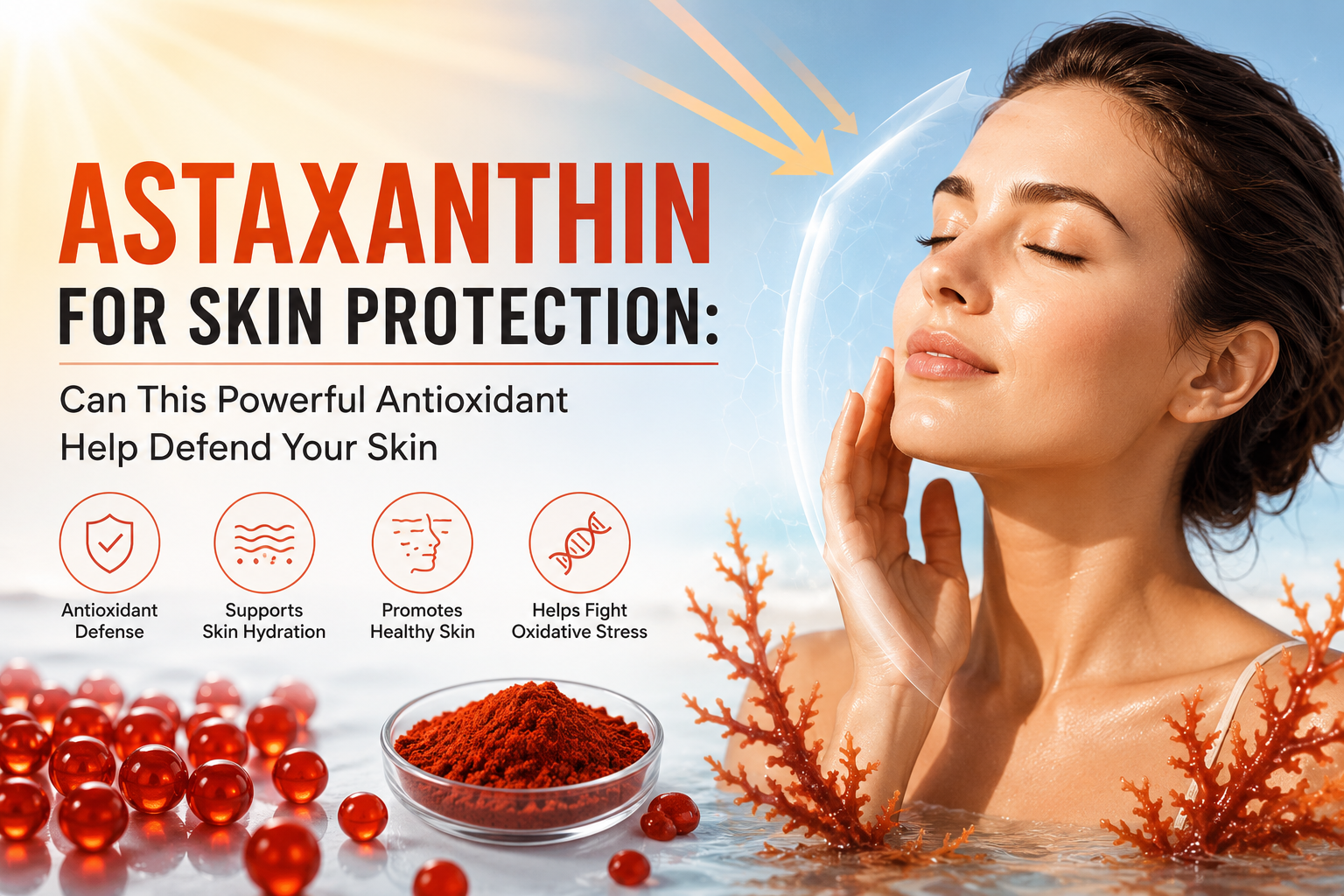
Astaxanthin for Skin Protection: Can This Powerful Antioxidant Help Defend Your Skin From Within?
Tue,14 Jul 2026 23:47:00- Font Size
- Share Content
Introduction
Most people think about protecting their skin only after stepping outside. They apply sunscreen, wear sunglasses, or seek shade when the weather gets warmer. While these habits remain essential, researchers have increasingly explored another aspect of skin health—supporting the skin's natural antioxidant defenses from within.
One ingredient that has received considerable scientific attention is astaxanthin.
Derived from the freshwater microalgae Haematococcus pluvialis, astaxanthin is a naturally occurring carotenoid responsible for the reddish color found in salmon, shrimp, trout, and flamingos. In nature, the algae produce astaxanthin as a defense mechanism against intense environmental stress, including ultraviolet (UV) exposure and oxidation. Scientists have been investigating whether these antioxidant properties may also help support human skin health.
Although astaxanthin is often called an "internal sunscreen" online, that description can be misleading.
Astaxanthin is not a sunscreen. It does not block UV rays like SPF lotions do. Instead, research suggests that astaxanthin may help support the body's antioxidant defenses against oxidative stress associated with environmental exposure. That makes it a valuable complement—not a replacement—for topical sunscreen and other sun-safe habits.
This guide explores the science behind astaxanthin, how it works, its potential skin benefits, and why many dermatologists and researchers consider it one of the most promising nutritional antioxidants for healthy skin.
What Is Astaxanthin?
Astaxanthin belongs to the carotenoid family of antioxidants, alongside beta-carotene, lutein, lycopene, and zeaxanthin. However, its molecular structure gives it unique properties that distinguish it from many other antioxidants.
Unlike some antioxidants that work only in water-soluble or fat-soluble environments, astaxanthin spans the entire cell membrane. This unique positioning allows it to help neutralize free radicals both inside and outside the cell membrane, providing broad antioxidant support.
Natural astaxanthin is primarily sourced from:
- Haematococcus pluvialis microalgae
- Wild salmon
- Trout
- Shrimp
- Lobster
- Krill
Most high-quality supplements like Sunsafe Rx use algae-derived astaxanthin because it provides a concentrated and sustainable source.
Why Oxidative Stress Matters for Skin Health
Every day, your skin encounters environmental stressors such as:
- UV radiation
- Air pollution
- Blue light
- Smoking
- Chronic stress
- Poor nutrition
These factors increase the production of reactive oxygen species (ROS)—commonly known as free radicals.
When free radicals outnumber your body's antioxidant defenses, oxidative stress occurs.
Oxidative stress has been associated with:
- Premature skin aging
- Collagen breakdown
- Fine lines
- Uneven skin tone
- Reduced skin elasticity
- Increased skin sensitivity
Your body naturally produces antioxidants to help neutralize these free radicals, but additional dietary antioxidants may help support this defense system. Research has focused on astaxanthin because of its exceptional antioxidant activity and its ability to accumulate within skin tissues after regular supplementation.
How Astaxanthin Supports Skin From Within
Unlike topical skincare products that work primarily on the skin's surface, oral astaxanthin enters the bloodstream after digestion and is distributed throughout the body.
Over time, astaxanthin becomes incorporated into cell membranes, where it may help:
Neutralize Free Radicals
Astaxanthin helps reduce oxidative stress by scavenging free radicals before they damage cellular structures.
Support Healthy Collagen
Collagen gives skin its strength and elasticity.
Oxidative stress contributes to collagen degradation. By helping reduce free-radical activity, astaxanthin may indirectly support healthy collagen maintenance.
Help Maintain Skin Hydration
Some clinical research suggests astaxanthin supplementation may help reduce transepidermal water loss (TEWL), allowing skin to retain moisture more effectively. Better hydration often translates into smoother, healthier-looking skin.
Support Normal Inflammatory Response
Environmental stress can trigger inflammatory pathways that contribute to redness and visible skin aging.
Astaxanthin's antioxidant properties may help support a healthy inflammatory response associated with normal skin function.
What Does Research Say?
Astaxanthin has been the subject of numerous laboratory and human studies investigating skin health.
While research continues, published studies have reported potential benefits including improvements in:
- Skin elasticity
- Skin moisture
- Fine lines
- Wrinkle appearance
- Skin texture
- Skin roughness
Several clinical studies have also examined its role in helping support the skin's natural response to UV-induced oxidative stress when taken consistently over several weeks. Importantly, researchers emphasize that these findings do not mean astaxanthin replaces sunscreen. Instead, it may provide an additional layer of antioxidant support alongside traditional sun-protection practices.
Can Astaxanthin Replace Sunscreen?
The short answer is no.
This is perhaps the biggest misconception surrounding astaxanthin.
Topical sunscreen works by:
- Reflecting UV rays
- Absorbing UV radiation
- Reducing UV penetration into the skin
Astaxanthin does none of these things.
Instead, it may help the body manage oxidative stress that occurs after environmental exposure through its antioxidant activity.
Think of it this way:
Topical Sunscreen | Astaxanthin Supplement |
Works on the skin surface | Works from within the body |
Blocks or absorbs UV rays | Supports antioxidant defenses |
Protects immediately after application | Requires consistent daily use |
Essential for UV protection | Complements topical sunscreen |
The most comprehensive skin protection strategy combines:
- Daily broad-spectrum SPF
- Protective clothing
- Seeking shade
- Healthy nutrition
- Antioxidant-rich foods
- Oral antioxidant supplements when appropriate
Astaxanthin vs Other Skin Antioxidants
Many antioxidants contribute to healthy skin, but each works differently.
Vitamin C
Supports collagen production and regenerates other antioxidants.
Vitamin E
Protects cell membranes from oxidative damage.
Lycopene
May help support the skin's response to environmental exposure.
Polypodium leucotomos
A tropical fern extract studied extensively for supporting the skin's natural defenses against UV-induced oxidative stress.
Astaxanthin
Offers broad antioxidant support and may complement other antioxidants because of its unique ability to integrate into cell membranes.
For this reason, many premium skin-support supplements combine astaxanthin with multiple antioxidants instead of relying on a single ingredient.
Clinical Research on Astaxanthin for Skin Health
Astaxanthin has been extensively studied for its antioxidant properties, with several human clinical trials evaluating its potential benefits for skin appearance and resilience. While more large-scale studies are still needed, current evidence is encouraging.
Research has investigated astaxanthin's effects on:
- Skin moisture and hydration
- Skin elasticity
- Fine lines and wrinkles
- Skin texture
- Oxidative stress markers
- The skin's response to environmental exposure
In one randomized, double-blind, placebo-controlled study, participants who supplemented with astaxanthin for several weeks experienced improvements in skin elasticity, moisture retention, and the appearance of fine wrinkles compared to baseline measurements. Researchers suggested these benefits were associated with astaxanthin's ability to help reduce oxidative stress and support normal collagen maintenance.
Other studies have reported that regular astaxanthin supplementation may help support the skin's natural resilience against environmental stressors by strengthening antioxidant defenses.
Although these findings are promising, researchers consistently note that astaxanthin should be viewed as part of a broader skincare strategy rather than a standalone solution.
How Long Does Astaxanthin Take to Work?
Unlike topical skincare products that may provide immediate cosmetic effects, oral antioxidants require time to accumulate within the body.
Most clinical studies evaluating astaxanthin have been conducted over 6 to 12 weeks of consistent daily supplementation.
The exact timeline varies depending on several factors, including:
- Individual metabolism
- Daily dosage
- Overall diet
- Lifestyle habits
- Existing antioxidant status
- Environmental exposure
Many users report noticing gradual improvements in overall skin appearance after several weeks of consistent use. However, long-term daily supplementation is generally recommended to maintain antioxidant support.
As with any nutritional supplement, consistency is more important than occasional use.
Natural Food Sources of Astaxanthin
Although supplements provide concentrated amounts of astaxanthin, this carotenoid also occurs naturally in several foods.
Common dietary sources include:
Food | Natural Astaxanthin Source |
Wild salmon | Rich source |
Sockeye salmon | Very high levels |
Rainbow trout | Moderate levels |
Shrimp | Moderate levels |
Lobster | Moderate levels |
Crab | Small amounts |
Krill | Natural source |
The reddish-orange color seen in many seafood species comes from astaxanthin accumulated through the food chain.
However, obtaining the same amounts used in clinical research through diet alone can be challenging, which is why many people choose high-quality supplements.
Why Astaxanthin Works Best with Other Antioxidants
Healthy skin depends on a network of antioxidants rather than a single nutrient.
Different antioxidants perform complementary roles throughout the body.
For example:
Vitamin C
Supports collagen synthesis and helps regenerate Vitamin E after it neutralizes free radicals.
Vitamin E
Helps protect cell membranes from oxidative damage.
Lycopene
Supports antioxidant protection and contributes to healthy skin.
Green Tea Extract (EGCG)
Provides polyphenols that help defend against oxidative stress.
Grape Seed Extract (OPCs)
Contains proanthocyanidins that help support collagen integrity and microcirculation.
Lutein and Zeaxanthin
Known for supporting both skin and eye health through antioxidant activity.
Polypodium leucotomos Extract
One of the most extensively researched botanical ingredients for supporting the skin's natural defenses against UV-induced oxidative stress.
When combined, these antioxidants create a broader spectrum of protection than any single ingredient alone.
This is why many advanced nutritional skincare formulas combine multiple antioxidant ingredients instead of relying exclusively on astaxanthin.
Astaxanthin and Polypodium leucotomos: A Powerful Combination
Astaxanthin and Polypodium leucotomos are often discussed together because they support skin health through complementary mechanisms.
Astaxanthin primarily works as a potent carotenoid antioxidant that helps neutralize free radicals and supports healthy cell membranes.
Polypodium leucotomos, a tropical fern extract, has been extensively studied for its ability to support the skin's natural response to UV-induced oxidative stress and help maintain normal skin function during environmental exposure.
When included in the same formulation, these ingredients provide comprehensive antioxidant support from multiple pathways.
Rather than relying on one antioxidant, combining several clinically studied ingredients may offer broader nutritional support for healthy skin.
Choosing a High-Quality Astaxanthin Supplement
Not all supplements are created equal.
When evaluating an astaxanthin product, consider the following factors:
Natural Source
Look for natural astaxanthin derived from Haematococcus pluvialis microalgae rather than synthetic alternatives.
Clinically Studied Ingredients
Products containing ingredients backed by peer-reviewed research generally provide greater confidence in quality.
Comprehensive Formula
Multi-antioxidant blends often provide broader support than single-ingredient products.
Manufacturing Standards
Choose supplements manufactured in facilities that follow Good Manufacturing Practices (GMP) and undergo third-party quality testing.
Transparent Labeling
A reputable supplement should clearly disclose its ingredients and recommended serving size.
Why Oral Sunscreen Includes Astaxanthin
Oral Sunscreen is formulated around the principle that healthy skin benefits from multiple antioxidants working together.
Rather than relying on one ingredient, the formula includes a carefully selected blend of research-backed antioxidants that help support the body's natural defenses against environmental oxidative stress.
The ingredients in the formula include antioxidants such as:
- Astaxanthin
- Polypodium leucotomos Extract
- Green Tea Extract (EGCG)
- Grape Seed Extract (OPCs)
- Lycopene
- Vitamin C
- Vitamin E
- Lutein
- Zeaxanthin
- Other complementary antioxidants and nutrients
Together, these ingredients have been studied for their ability to help support healthy skin, defend against oxidative stress, and promote overall skin wellness.
Important: Oral Sunscreen is a dietary supplement designed to complement—not replace—daily broad-spectrum sunscreen, protective clothing, and other sun-safe practices.
Final Thoughts
Astaxanthin has emerged as one of the most researched nutritional antioxidants for skin health. Its unique ability to support antioxidant defenses throughout the body has made it a valuable ingredient in modern inside-out skincare formulations.
Current research suggests that astaxanthin may help support healthy skin by reducing oxidative stress, promoting skin hydration, supporting collagen maintenance, and improving overall skin appearance when taken consistently as part of a healthy lifestyle.
However, it's important to remember that astaxanthin is not a replacement for sunscreen. The most effective approach to skin protection combines daily broad-spectrum SPF, protective clothing, shade, healthy nutrition, and science-backed antioxidant supplementation.
If you're looking for comprehensive nutritional support, choosing a formula that combines astaxanthin with other clinically studied antioxidants—such as Polypodium leucotomos extract, green tea extract, grape seed extract, lycopene, Vitamins C and E, lutein and zeaxanthin—can provide broader support than relying on a single ingredient alone.
By pairing smart sun-safe habits with a well-formulated antioxidant supplement, you can help support healthier, more resilient skin from the inside out.
Frequently Asked Questions
Q1. What is astaxanthin, and how does it support skin health?
Astaxanthin is a naturally occurring carotenoid antioxidant derived from microalgae. Research suggests it helps support the skin's antioxidant defenses, maintain hydration, and promote healthy-looking skin by reducing oxidative stress caused by environmental factors.
Q2. Can astaxanthin replace sunscreen?
No. Astaxanthin does not block or absorb UV rays like topical sunscreen. It is a dietary antioxidant that complements broad-spectrum SPF by helping support the body's natural defense against oxidative stress associated with sun exposure.
Q3. How long does astaxanthin take to show results?
Most clinical studies evaluate astaxanthin over 6–12 weeks of consistent daily use. Individual results vary, but regular supplementation alongside a healthy lifestyle may gradually support skin hydration, elasticity, and overall appearance.
Q4. Is astaxanthin safe to take every day?
Astaxanthin has been well tolerated in many clinical studies when used as directed. Follow the recommended serving size, and consult a healthcare professional before use if you are pregnant, nursing, or taking prescription medications.
Q5. What foods naturally contain astaxanthin?
Astaxanthin occurs naturally in wild salmon, trout, shrimp, lobster, crab, and krill. However, the amounts in food are generally lower than those used in research, so many people choose supplements for more consistent intake.
Q6. Can astaxanthin be taken with other antioxidants?
Yes. Astaxanthin is commonly combined with antioxidants such as Vitamin C, Vitamin E, Polypodium leucotomos, Green Tea Extract, and Lycopene to provide broader nutritional support for healthy skin and antioxidant defense.
Q7. Why is astaxanthin included in Oral Sunscreen formulas?
The ingredients in Oral Sunscreen formulas are selected for their antioxidant properties. Astaxanthin works alongside other researched antioxidants to help support the skin's natural defenses against environmental oxidative stress as part of a daily routine.
Q8. Who can benefit from an astaxanthin supplement?
Adults seeking additional nutritional support for healthy skin may benefit from astaxanthin. It is especially popular among people with active outdoor lifestyles who want to complement topical sunscreen with daily antioxidant support.