Inside-Out Sun Protection: The Science Behind Oral Supplements
Tue,04 Aug 2026 12:16:00- Font Size
- Share Content
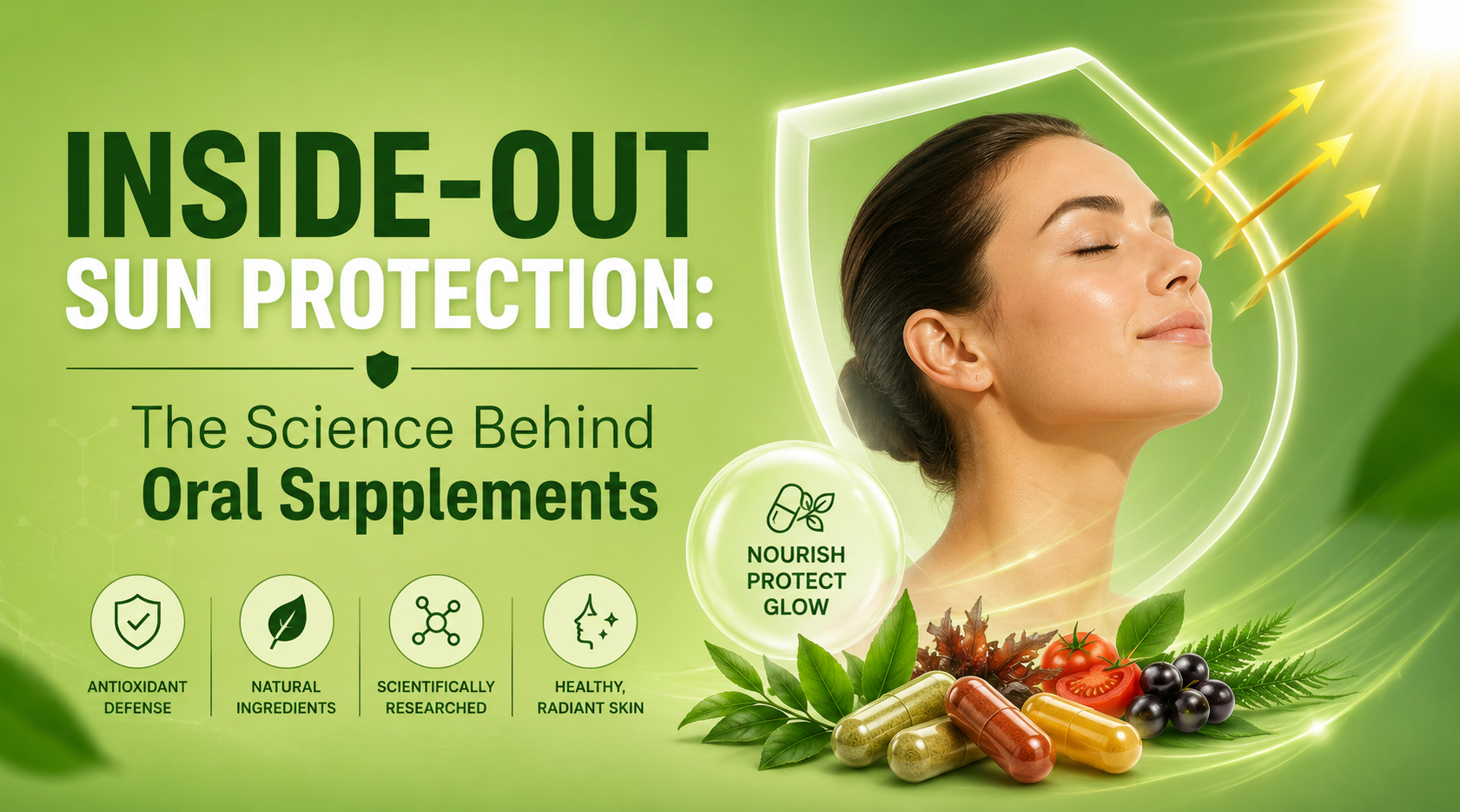
Most people understand the importance of applying sunscreen before spending time outdoors. But over the past few years, another approach to supporting skin health has gained significant attention: oral sun protection.
Unlike traditional sunscreens that sit on the surface of the skin, oral supplements work from the inside out by supplying antioxidants and plant-based compounds that help the body respond to environmental stressors associated with ultraviolet (UV) exposure.
So, are these supplements really effective? What does the science actually say?
Let's explore the research behind inside-out sun protection, how these supplements work, and why many dermatologists consider them an excellent complement to topical sunscreen—not a replacement.
What Is Oral Sun Protection?
Oral sun protection refers to dietary supplements formulated with antioxidants, botanical extracts, vitamins, minerals, and carotenoids that support the skin's natural defense systems.
Rather than creating a physical barrier like sunscreen lotions, these supplements help the body combat oxidative stress generated by UV radiation.
It's important to understand one key distinction:
Oral supplements do not block UV rays.
Instead, the ingredients in these supplements have been studied for their ability to help reduce oxidative damage and support healthy skin responses after sun exposure.
This is why dermatologists recommend using them alongside:
- Broad-spectrum sunscreen
- Protective clothing
- Sunglasses
- Shade whenever possible
Think of oral supplements as supporting your skin from the inside while sunscreen protects it from the outside.
Understanding What Happens During Sun Exposure
To understand how oral supplements work, it helps to know what happens when your skin encounters sunlight.
Ultraviolet radiation generates unstable molecules known as free radicals.
These free radicals can:
- Damage skin cells
- Break down collagen
- Increase inflammation
- Accelerate visible skin aging
- Cause oxidative stress
Normally, the body uses antioxidants to neutralize these free radicals.
However, prolonged or intense UV exposure can overwhelm the body's natural antioxidant defenses.
That's where nutritional support becomes valuable.
The Science Behind Oral Supplements
Many oral sun protection supplements are built around one scientific concept:
Increasing the body's antioxidant capacity.
Antioxidants donate electrons to unstable free radicals, helping prevent cellular damage before it spreads.
Researchers have identified several nutrients that appear particularly helpful for supporting healthy skin during environmental exposure.
Let's examine the most studied ingredients.
1. Polypodium leucotomos Extract
One of the best-researched ingredients in oral photoprotection is Polypodium leucotomos, a tropical fern native to Central America.
Over the past two decades, numerous clinical studies have investigated its effects on skin health.
Research suggests Polypodium leucotomos may help:
- Reduce oxidative stress
- Support the skin's natural defenses
- Reduce UV-induced redness
- Help maintain healthy skin cells
- Support collagen preservation
Because of its strong scientific backing, this botanical has become one of the most common ingredients in dermatologist-recommended oral sun protection supplements.
2. Astaxanthin
An astaxanthin supplement for skin is a naturally occurring carotenoid found in algae and seafood like salmon.
It has attracted considerable scientific interest because of its exceptional antioxidant activity.
Research suggests astaxanthin may help:
- Reduce oxidative stress
- Improve skin elasticity
- Support moisture retention
- Minimize visible signs of aging
- Help protect skin cells from environmental stress
Some laboratory studies indicate that astaxanthin may be significantly more powerful than many traditional antioxidants when neutralizing free radicals.
3. Lycopene
Lycopene is the red pigment naturally found in tomatoes and watermelon.
It is one of the most studied carotenoids for skin protection.
Several human studies have found that regular dietary intake of lycopene may help:
- Reduce sensitivity to UV exposure
- Lower oxidative damage
- Support smoother skin texture
- Promote healthy collagen
Unlike sunscreen, these effects develop gradually over weeks of consistent intake.
4. Green Tea Extract (EGCG)
Green tea contains polyphenols, especially Epigallocatechin Gallate (EGCG).
These compounds have been widely studied for their anti-inflammatory and antioxidant properties.
Research suggests EGCG may help:
- Neutralize free radicals
- Reduce inflammation
- Support DNA repair mechanisms
- Protect collagen
- Promote healthier-looking skin
Because green tea works through multiple antioxidant pathways, it frequently appears in advanced oral skincare formulas.
5. Vitamin C and Vitamin E
These two vitamins work particularly well together.
Vitamin C helps:
- Produce collagen
- Regenerate Vitamin E
- Reduce oxidative stress
Vitamin E helps:
- Protect cell membranes
- Reduce lipid oxidation
- Support skin hydration
Together, they provide stronger antioxidant protection than either nutrient alone.
6. Lutein and Zeaxanthin
Although commonly associated with eye health, lutein and zeaxanthin also accumulate within skin tissue.
Studies suggest they may help:
- Improve skin hydration
- Support elasticity
- Reduce oxidative stress
- Maintain healthy skin appearance
7. Grape Seed Extract
Grape seed extract contains oligomeric proanthocyanidins (OPCs), among the most potent naturally occurring antioxidants.
Research indicates OPCs may support:
- Healthy collagen
- Skin elasticity
- Microcirculation
- Overall antioxidant defenses
Why Antioxidants Matter
One antioxidant alone can provide benefits.
However, multiple antioxidants working together often create a broader defense against oxidative stress.
This is why many premium oral supplements combine ingredients such as:
- Polypodium leucotomos
- Astaxanthin
- Lycopene
- Green tea extract
- Vitamin C
- Vitamin E
- Zinc
- Selenium
- Omega-3 fatty acids
- Lutein
- Zeaxanthin
Each ingredient supports different biological pathways involved in skin health.
What Does Research Say?
Clinical studies continue to grow in this field.
Research has demonstrated that certain oral antioxidants may help:
- Improve the skin's resistance to oxidative stress
- Reduce UV-induced redness
- Support collagen integrity
- Enhance antioxidant capacity
- Improve overall skin health
However, researchers consistently emphasize an important point:
No oral supplement should replace sunscreen.
Instead, the evidence supports using oral supplements as part of a comprehensive sun protection strategy.
How Long Do Oral Supplements Take to Work?
Unlike sunscreen, oral supplements don't provide immediate protection.
Most clinical studies observe benefits after:
- 4 weeks
- 8 weeks
- 12 weeks
This is because antioxidants gradually build supportive nutrient levels within the body.
Consistency is essential.
Taking a supplement occasionally is unlikely to produce the same results as daily use.
Who May Benefit Most?
Oral sun protection supplements may be particularly useful for:
- People who spend significant time outdoors
- Individuals with active lifestyles
- Frequent travelers
- Golfers
- Hikers
- Cyclists
- Beachgoers
- Gardeners
- People concerned about premature skin aging
They may also appeal to individuals seeking additional nutritional support for long-term skin health.
Oral Supplements vs. Sunscreen
Oral Supplements | Sunscreen |
Work from inside the body | Protect the skin surface |
Support antioxidant defenses | Block or absorb UV rays |
Require daily consistency | Applied before sun exposure |
Build benefits over time | Work immediately after application |
Complement sunscreen | First line of UV protection |
The two approaches are not competitors.
They work best together.
Choosing a Quality Oral Sun Protection Supplement
Not all supplements contain clinically researched ingredients.
When evaluating a product, look for formulas that include:
- Standardized botanical extracts
- Multiple antioxidants
- Clinically studied ingredients
- Transparent ingredient labeling
- Quality manufacturing standards
- Third-party testing when available
Products manufactured in FDA-registered and NSF-certified facilities can provide additional confidence in quality.
Building a Complete Sun Protection Routine
Experts recommend combining multiple protective strategies:
- Apply broad-spectrum SPF 30+ sunscreen daily.
- Reapply sunscreen every two hours when outdoors.
- Wear protective clothing and wide-brimmed hats.
- Use UV-blocking sunglasses.
- Seek shade during peak sunlight hours.
- Stay hydrated.
- Eat an antioxidant-rich diet.
- Consider a scientifically formulated oral sun protection supplement for additional nutritional support.
Together, these habits provide more comprehensive skin protection than any single approach alone.
Final Thoughts
Inside-out sun protection is one of the most exciting developments in modern skincare nutrition.
A growing body of research suggests that ingredients such as Polypodium leucotomos, astaxanthin, lycopene, green tea extract, vitamins C and E, lutein, zeaxanthin, and grape seed extract can help support the skin's natural defenses against oxidative stress associated with UV exposure.
While oral supplements are not sunscreens and should never replace topical SPF, they can play an important role in a well-rounded sun protection routine by providing antioxidant support from within.
When combined with sunscreen, protective clothing, and healthy lifestyle habits, oral supplements like Sunsafe Rx offer an additional layer of support for maintaining healthier, more resilient skin over time.
Disclaimer
The ingredients commonly found in oral sun protection supplements have been studied for their ability to support the skin's natural defenses against oxidative stress associated with UV exposure. These supplements are not intended to replace sunscreen or other protective measures. Always use a broad-spectrum sunscreen, wear protective clothing, and follow safe sun practices when spending time outdoors.